Can Solar Panels Power Your Entire House? A Homeowner’s Guide
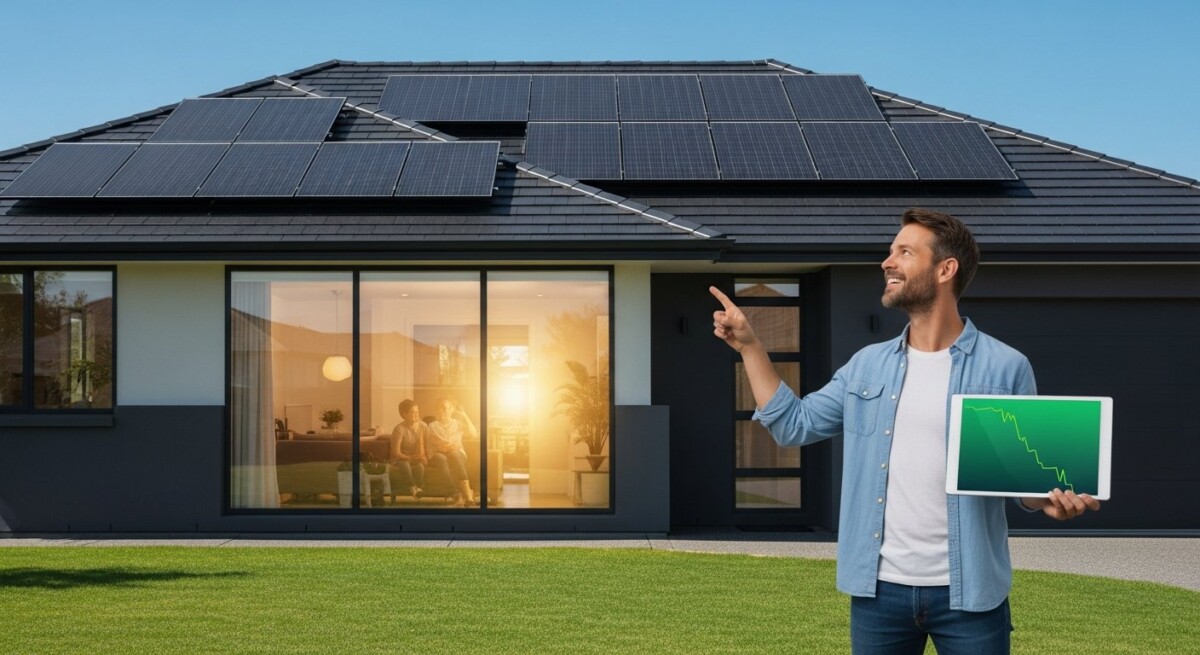
If you’ve watched your electricity bill climb month after month, you’re not alone. Many homeowners are searching for a reliable way to reduce their energy costs and gain independence from the unpredictable grid. This search often leads to one powerful question: can solar panels power an entire house? The answer is a resounding yes, and understanding how can be your first step toward significant long-term savings.
Understanding Can Solar Panels Power Entire House
When we ask if solar panels can power an entire house, we’re talking about a system that meets 100% of your home’s electricity needs. This is achieved by installing enough solar panels on your roof to generate electricity equal to or greater than what your household consumes over a year. The system converts sunlight into usable power for your appliances, lighting, and electronics.
Modern solar systems are designed to work seamlessly with your home. During sunny days, the panels produce electricity, powering your home in real-time. Any excess energy not immediately used is typically sent back to the utility grid, often earning you credits through a process called net metering.
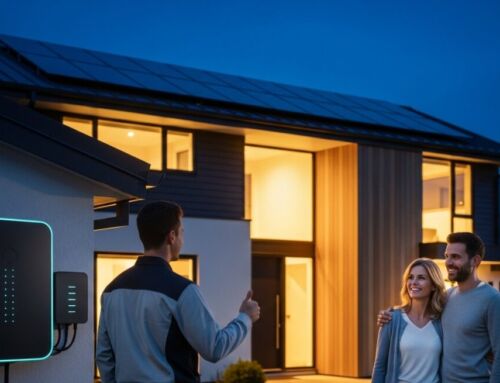
This setup allows your home to draw power from the grid at night or on cloudy days, using those earned credits. For true energy independence, some homeowners add battery storage to their system, which stores surplus solar energy for use anytime.
Why Solar Energy Is Becoming More Popular
Homeowners are turning to solar power for several compelling reasons. First and foremost are rising electricity prices, which make a fixed-cost solar investment increasingly attractive. By generating your own power, you protect yourself from future rate hikes and lock in lower energy costs for decades.
Environmental concerns are another major driver. Solar energy is clean, renewable, and reduces your household’s carbon footprint. Beyond the feel-good factor, this shift offers practical long-term financial savings, transforming a monthly expense into a home equity investment.
Government incentives, like the federal solar tax credit, make the initial investment more accessible. These financial benefits, combined with improved panel efficiency and lower equipment costs, have made whole-house solar power a realistic goal for many.
If you are considering solar power for your home, comparing installation quotes can help you understand your options. Request a free solar quote or call to learn more.
Common Questions Homeowners Have About Solar
It’s natural to have questions before making a significant home upgrade. Many wonder about the upfront cost, which, while substantial, is offset by incentives and long-term savings. Others are concerned about their roof’s suitability or how the system will perform in their specific climate.
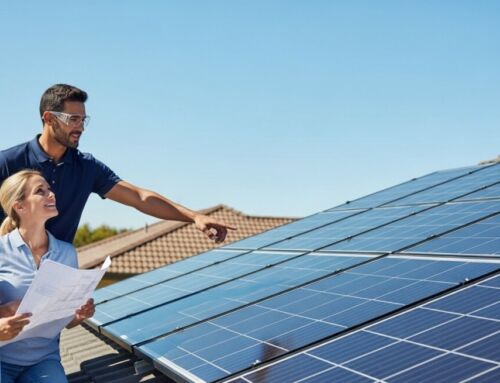
A professional installer can address all these concerns with a detailed home assessment. They will evaluate your energy usage, roof condition, sun exposure, and local weather patterns to design a system tailored for your needs.
- What is the total cost, and what financing options exist?
- Is my roof strong enough and facing the right direction?
- What happens during cloudy days or at night?
- How long will the installation process take?
- Will solar panels increase my property value?
- What maintenance is required for the system?
How Solar Panel Installation Works
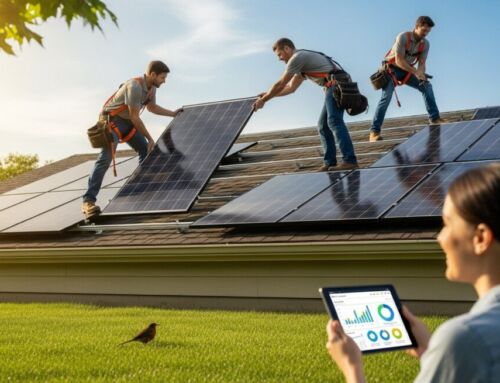
The installation process is managed by professionals from start to finish. It begins with a comprehensive evaluation of your home and energy needs. This ensures the system is correctly sized to power your entire house efficiently.
Once the design is finalized, your installer handles all the necessary permits and approvals from your local government and utility company. This step is crucial for safety, compliance, and securing your connection to the grid for net metering.
- Home Energy Assessment: Review of past bills and a site evaluation.
- System Design & Proposal: Custom plan showing system size, cost, and savings.
- Permits & Approvals: Securing all required local and utility permissions.
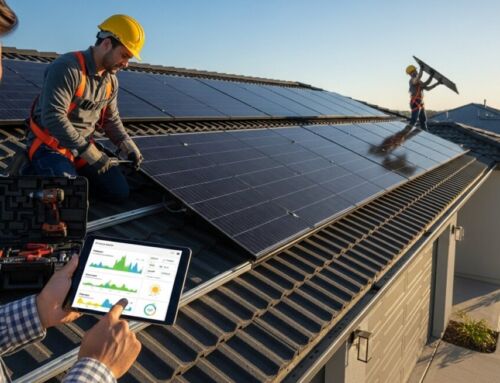
- Panel Installation: Mounting equipment and electrical integration, usually in 1-3 days.
- Inspections & Activation: Final checks by the city and utility before turning the system on.
Speaking with experienced installers can help you determine the best solar solution for your home. Compare solar quotes here or call to explore available options.
Signs Your Home May Be Ideal for Solar
Certain conditions make a home particularly well-suited for a solar installation that can power the entire house. The most obvious is having a roof with strong, unobstructed sunlight exposure for most of the day, typically facing south, east, or west.
If you have high monthly electricity bills, you have more to save, making the return on investment faster. A suitable roof with adequate space and a relatively new structure is also a key indicator that solar could be a smart move.
- You pay high monthly electricity bills.
- Your roof gets direct sunlight for 6+ hours a day.
- You have a large, unshaded roof area (south-facing is ideal).
- You plan to own your home for the next 5-10+ years.
- Your roof is in good condition and less than 15 years old.
- You live in an area with strong net metering policies.
What Affects Solar Installation Costs
The final cost of your system depends on several key factors. The primary driver is the system’s size, measured in kilowatts (kW), which is determined by your home’s energy consumption. A larger system to power an entire house with high usage will cost more upfront but yields greater savings.
Equipment quality, such as panel efficiency and inverter type, also influences price. Higher-efficiency panels may cost more but can produce more power in limited space. Installation complexity, like a steep or multi-level roof, can add to labor costs.
Fortunately, local and federal incentives significantly reduce the net cost. The federal investment tax credit allows you to deduct a percentage of the system cost from your taxes, and many states offer additional rebates.
The cost of solar installation varies depending on your home and energy needs. Request personalized solar quotes or call to see what options are available.
Tips for Choosing a Reliable Solar Installer
Selecting the right installer is as important as choosing the right system. A reputable company will ensure your system is designed correctly, installed safely, and performs optimally for decades. They are your guide through permits, incentives, and system maintenance.
Always check for proper licensing, insurance, and certifications, like the North American Board of Certified Energy Practitioners (NABCEP). Don’t hesitate to ask for references and read online reviews to gauge customer satisfaction.
- Verify licenses, insurance, and industry certifications (e.g., NABCEP).
- Choose a company with several years of local installation experience.
- Review the warranty coverage on both equipment and workmanship.
- Read customer reviews and ask for local references.
- Get detailed, written proposals from at least three different companies.
- Ensure they handle the entire process, including permits and interconnection.
Long-Term Benefits of Installing Solar Panels
The most immediate and impactful benefit is the drastic reduction or even elimination of your electricity bill. This predictable energy cost provides financial stability and protection against rising utility rates for 25 years or more, the typical lifespan of modern panels.
Solar panels also increase your home’s market value and appeal to future buyers. Studies consistently show homes with solar sell faster and for more money. Furthermore, you gain a greater degree of energy independence, reducing your reliance on the traditional grid.
On a broader scale, you contribute to a cleaner environment by reducing fossil fuel dependence. This combination of personal financial savings, increased home equity, and environmental stewardship makes solar a uniquely powerful home investment.
Can solar panels really power my whole house?
Yes, a properly sized and installed solar panel system can generate enough electricity to meet 100% of a typical home’s annual energy needs. This is achieved by calculating your past energy usage and designing a system that produces an equivalent amount of power.
What happens when the sun isn’t shining?
Your home remains connected to the traditional utility grid. At night or on cloudy days, you seamlessly draw power from the grid. During sunny days, your excess solar production is sent to the grid, earning you credits that offset this nighttime usage through net metering.
How much do solar panels cost for a full house?
The gross cost varies widely based on system size and location, typically ranging from $15,000 to $35,000 before incentives. After applying the federal tax credit and any local rebates, the net investment is significantly lower, often paying for itself in 5-10 years through electricity savings.
Will solar panels work on my roof?
Most roofs are suitable if they are structurally sound and receive adequate sunlight. South-facing roofs with a slope between 15 and 40 degrees are ideal, but east and west-facing roofs also work well. A professional installer can assess your specific roof during a site evaluation.
How long does a solar panel system last?
High-quality solar panels are typically guaranteed to produce at least 80% of their original output after 25 years. The inverters, which convert the power, may need replacement once during the system’s lifespan, usually after 10-15 years.
Do I need to clean or maintain my solar panels?
Solar panels require minimal maintenance. In most climates, rainfall is sufficient to keep them clean. In very dusty areas or places with little rain, an occasional cleaning with a hose may be beneficial to ensure maximum efficiency.
Powering your entire home with solar energy is an achievable goal that offers financial control, energy independence, and environmental benefits. The key to success lies in a custom-designed system and professional installation. By comparing detailed quotes from trusted local installers, you can make an informed decision that will power your home and savings for decades to come.