Why Solar Savings Estimates Change and How to Get Accurate Numbers
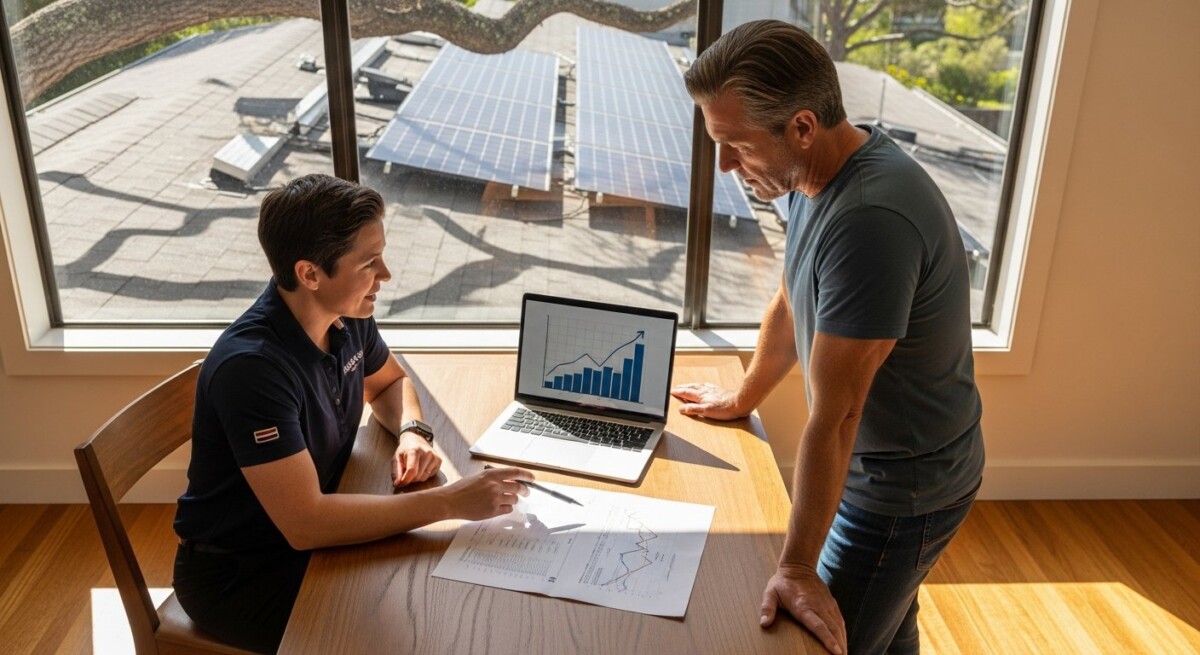
You have probably seen a solar advertisement promising huge monthly savings. Then you get a quote, and the numbers look different. This gap between advertised numbers and real quotes leaves many homeowners confused and hesitant to move forward.
Rising electricity costs push more families to search for why solar savings estimates change. Understanding this difference helps you make a smarter decision about reducing your energy bills and becoming less dependent on the power grid.
In this article, we will break down the real factors behind solar savings estimates so you can compare quotes with confidence.
Understanding Why Solar Savings Estimates Change
Solar savings estimates change because every home uses energy differently. Your electricity consumption, local utility rates, roof angle, and shading all affect how much power your panels will produce and how much you will save.
A solar company uses software to model your home’s potential energy production. These models rely on assumptions about weather patterns, panel degradation over time, and future electricity rate increases. Small changes in any of these inputs can shift the savings projection by thousands of dollars over the life of your system.
Another major reason estimates vary is the way your utility company handles net metering. Some utilities credit you at the full retail rate for excess energy you send to the grid, while others pay a lower wholesale rate. The net metering policy in your area directly impacts how quickly you recoup your investment. For a detailed breakdown of how these numbers work in practice, see our Solar Savings Breakdown Example: See Your Real Benefits.
What Goes Into a Solar Savings Estimate
Installers consider your home’s annual energy usage, which they find on your past utility bills. They also evaluate your roof’s size, pitch, orientation, and shading from trees or nearby buildings.
Equipment choices matter too. Higher-efficiency panels produce more electricity in limited space, but they cost more. Inverters, racking systems, and monitoring technology also influence the total system price and long-term output.
Why Solar Energy Is Becoming More Popular
Electricity rates have risen faster than inflation in most states over the past decade. Homeowners feel the pinch every month and look for ways to stabilize their energy costs. Solar panels offer a hedge against future rate hikes by locking in a predictable energy expense.
Environmental concerns also drive adoption. Many families want to reduce their carbon footprint and contribute to a cleaner grid. Solar power produces no emissions during operation, which aligns with the values of eco-conscious homeowners.
Long-term savings remain the biggest motivator. A well-designed solar system can pay for itself in 6 to 10 years and then provide free electricity for another 15 to 20 years. Over the system’s lifetime, total savings often exceed $20,000 to $40,000 depending on local conditions.
If you are considering solar power for your home, comparing installation quotes can help you understand your options. Request a free solar quote or call to learn more.
Common Questions Homeowners Have About Solar
Before investing in solar panels, most homeowners want clear answers about cost, suitability, and performance. These concerns are valid and deserve straightforward explanations.
Installation cost is usually the first question. The average residential solar system in the United States costs between $15,000 and $25,000 before incentives. Federal and state tax credits can reduce that amount by 30 percent or more, making solar more affordable than many people realize.
Roof suitability also comes up frequently. Not every roof works well for solar panels, but many do. Factors like age, material, shading, and orientation determine whether your roof is a good candidate.
- How much will solar panels really save me each month?
- Is my roof strong enough and old enough to support panels?
- What happens on cloudy days or at night?
- How long does it take to break even on the investment?
- Will solar panels increase my home insurance or property taxes?
- Do I need to replace my roof before installing panels?
How Solar Panel Installation Works
The installation process is more straightforward than most homeowners expect. Professional installers handle everything from design to permits to final connection with the utility company.
A typical residential solar installation takes one to three days, depending on system size and roof complexity. The process begins long before the crew arrives on your roof.
- Home energy assessment , The installer reviews your utility bills and evaluates your roof to determine the optimal system size.
- System design , Using software, the team designs a layout that maximizes sun exposure and meets your energy needs.
- Permits and approvals , The installer files necessary permits with your local building department and submits interconnection paperwork to your utility.
- Panel installation , Crews mount racking, install panels, connect wiring, and set up the inverter and monitoring system.
- System activation , After a final inspection and utility approval, your system is turned on and starts generating electricity.
Speaking with experienced installers can help you determine the best solar solution for your home. Compare solar quotes here or call to explore available options.
Signs Your Home May Be Ideal for Solar
Not every home is a perfect candidate for solar, but many properties have the right conditions to generate significant savings. Knowing the signs helps you evaluate your own home before investing time in quotes.
Homes with south-facing roofs that receive direct sunlight for most of the day produce the most energy. Even east- or west-facing roofs can work well, though total output will be slightly lower.
- Your roof gets at least five hours of direct sunlight per day.
- Your monthly electricity bill exceeds $100.
- You have 300 square feet or more of unshaded roof space.
- Your roof is in good condition and less than 10 years old.
- You plan to stay in your home for at least 5 to 7 more years.
- Your state or utility offers net metering or solar incentives.
What Affects Solar Installation Costs
Solar installation costs vary widely based on several key factors. Understanding these variables helps you compare quotes fairly and avoid paying too much for a system that does not meet your needs.
System size is the biggest cost driver. A larger system that covers 100 percent of your energy usage costs more upfront but delivers greater long-term savings. Smaller systems cost less but may leave you still paying part of your electric bill.
Equipment quality also matters. Premium panels from brands like SunPower or LG cost more than budget panels but often come with better warranties and higher efficiency. Inverter type , string inverter versus microinverters versus power optimizers , also affects price and performance.
Installation complexity adds to the labor cost. Roofs with steep pitches, multiple stories, or unusual materials take more time and safety equipment to work on. Local permit fees and utility interconnection charges vary by jurisdiction as well.
The cost of solar installation varies depending on your home and energy needs. Request personalized solar quotes or call to see what options are available.
Tips for Choosing a Reliable Solar Installer
Finding a trustworthy installer is just as important as choosing the right equipment. A poorly installed system can underperform, create roof leaks, or void equipment warranties.
Start by researching companies with strong local reputations. National brands often have streamlined processes, but local installers may offer more personalized service and faster response times for maintenance.
- Verify the company is licensed and insured in your state.
- Ask about workmanship and equipment warranties , 25 years is standard for panels.
- Read customer reviews on Google, Yelp, and the Better Business Bureau.
- Request at least three quotes and compare line items, not just total price.
- Ask for references from recent installations in your area.
- Ensure the installer handles permits and utility paperwork for you.
Long-Term Benefits of Installing Solar Panels
Solar panels offer benefits that go far beyond monthly electricity bill savings. Homeowners who invest in solar gain financial, environmental, and lifestyle advantages that compound over time.
Lower electricity bills are the most immediate benefit. After your system is paid off, you essentially generate free power for the remaining life of the panels. Most modern panels last 25 to 30 years with minimal degradation.
Home value also increases. Studies show that homes with solar panels sell for 4 to 6 percent more than comparable homes without solar. Buyers appreciate the lower utility costs and often pay a premium for an already-installed system.
Energy independence gives you peace of mind. When paired with battery storage, solar panels can keep your lights on during grid outages. Even without batteries, you reduce your reliance on fossil fuels and volatile utility rate increases.
Frequently Asked Questions
Why do my solar savings estimates keep changing between quotes?
Different installers use different assumptions about future electricity rate increases, panel degradation, and your home’s sun exposure. Each company’s software may also calculate savings slightly differently. Comparing the assumptions behind each quote helps you understand which estimate is most realistic.
How much can I really save by switching to solar?
Typical homeowners save between $10,000 and $40,000 over the 25-year life of their solar system. Your actual savings depend on your local electricity rates, system size, available incentives, and how much sun your roof receives. A professional installer can give you a personalized projection.
Will solar panels work on my roof if it is shaded?
Partial shading reduces solar production, but modern technologies like microinverters and power optimizers minimize the impact. If your roof has heavy shade from trees or nearby buildings, an installer may recommend trimming trees or choosing a different roof section. A site evaluation will give you a clear answer.
What happens to my solar savings if I move?
Solar panels can increase your home’s resale value, and many buyers are willing to pay a premium for a system that lowers their utility bills. You can also transfer your solar lease or power purchase agreement to the new homeowner, depending on the terms of your contract.
Do solar panels still produce energy on cloudy days?
Yes, solar panels still generate electricity on cloudy days, though output drops to about 10 to 25 percent of full capacity. Rain actually helps keep panels clean and efficient. Net metering allows you to bank excess energy from sunny days to use during cloudy periods.
How long does it take to break even on a solar investment?
The average payback period in the United States is 6 to 10 years. This timeline depends on your system cost, available incentives, and local electricity rates. After the break-even point, your electricity is essentially free for the remaining life of the panels.
Are there government incentives available for solar in 2025?
Yes, the federal solar Investment Tax Credit (ITC) currently offers a 30 percent tax credit on the total cost of your solar system. Many states and utilities also offer additional rebates, performance-based incentives, or property tax exemptions. Your installer can help you identify all applicable incentives.
Should I get multiple solar quotes before deciding?
Absolutely. Comparing quotes from at least three installers helps you see differences in equipment, pricing, warranties, and savings projections. This comparison ensures you get the best value and avoid overpaying for a system that does not meet your needs.
Understanding why solar savings estimates change helps you cut through the marketing and make an informed decision. Rising electricity costs, environmental concerns, and long-term financial savings make solar a smart investment for many homeowners. By comparing installation quotes from multiple trusted professionals, you can find the right system for your home and budget. Start exploring your options today and take the first step toward energy independence.