How to Compare Solar System Proposals and Save on Energy Bills
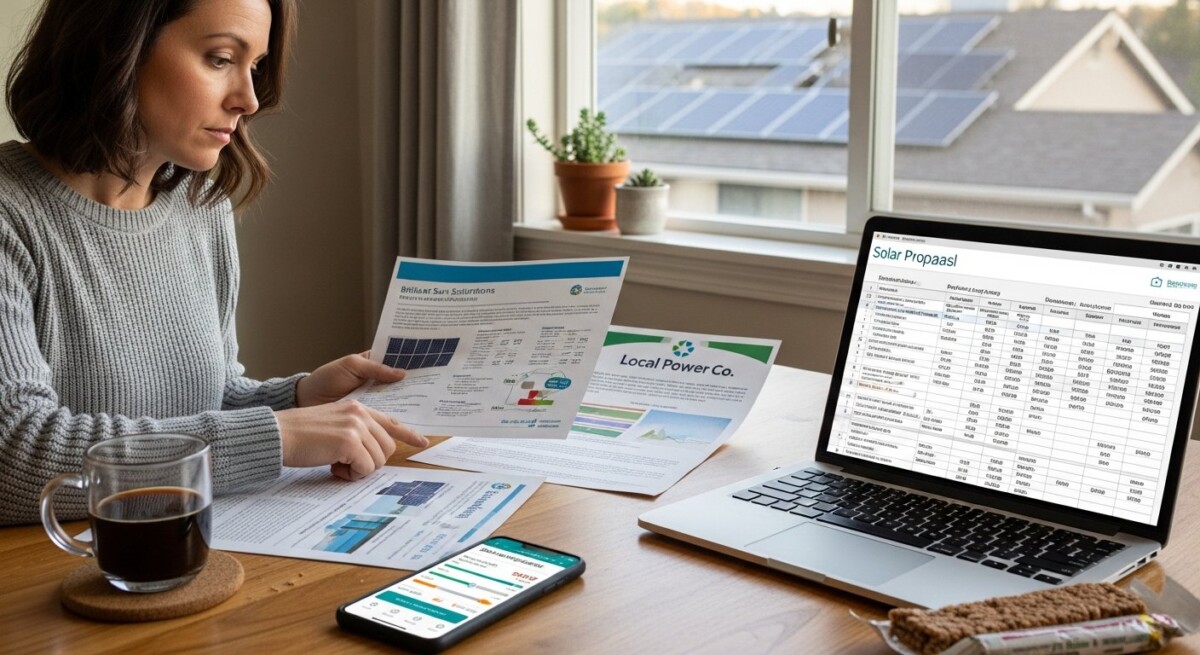
Your electricity bill keeps climbing. Every month, you pay more for the same energy use. You have started wondering if solar panels could finally cut those costs. Many homeowners reach this point and begin searching for how to compare solar system proposals. The idea of reducing monthly bills and becoming less dependent on the power grid is appealing. In this guide, we will walk you through exactly what to look for when comparing solar quotes so you can make a confident, informed decision.
How to Compare Solar System Proposals
Comparing solar system proposals means looking at multiple offers from different installers side by side. Each proposal outlines the equipment, costs, financing, and expected energy production for your home. The goal is to find the best combination of price, quality, and long-term value.
When you understand how to compare solar system proposals, you avoid paying too much or choosing underperforming equipment. A thorough comparison helps you see differences in panel efficiency, inverter quality, warranty terms, and installation practices. More homeowners are taking this step because solar is a long-term investment, not just a purchase.
In our guide on how to compare solar financing options and save more, we explain how different payment plans affect your total savings. Pairing that knowledge with proposal comparisons gives you a complete picture of your solar investment.
Why Solar Energy Is Becoming More Popular
Rising electricity prices are the main reason homeowners switch to solar. Utility rates have increased faster than inflation in many areas, and that trend is expected to continue. Solar panels let you lock in a lower, predictable energy cost for decades.
Environmental concerns also drive interest. Homeowners want to reduce their carbon footprint and contribute to a cleaner energy grid. Solar power produces no emissions during operation, making it one of the most environmentally friendly choices available.
Long-term savings are another powerful motivator. While solar installation requires an upfront investment, the system usually pays for itself within six to ten years through reduced electricity bills. After that, the electricity it produces is essentially free. This combination of savings, independence, and environmental benefit makes solar increasingly attractive.
If you are considering solar power for your home, comparing installation quotes can help you understand your options. Request a free solar quote or call to learn more.
Common Questions Homeowners Have About Solar
Many homeowners worry about the upfront cost of solar panels. The good news is that federal tax credits, state rebates, and financing options can significantly reduce the initial expense. Most installers offer zero-down loan programs, so you can start saving from day one.
Roof suitability is another frequent concern. Your roof should have enough unshaded space, face roughly south or west, and be in good condition. A professional installer will assess your roof during a site visit and tell you if any repairs or upgrades are needed.
System performance depends on sunlight, panel orientation, and local weather. Modern panels work well even on cloudy days, though production will be lower than on sunny ones. Installers use software to estimate annual energy output based on your specific location and roof design.
- How much will solar panels cost for my home?
- Will solar work on my roof?
- How long does installation take?
- What happens during a power outage?
- Do I need to replace my roof first?
- How long do solar panels last?
How Solar Panel Installation Works
Solar installation follows a clear step-by-step process. First, an installer performs a home energy assessment to review your electricity usage and roof characteristics. They use this data to design a system that meets your needs.
After you approve the design, the installer handles permits and approvals from your local government and utility company. This step can take two to four weeks, depending on your area. Once permits are in place, the physical installation usually takes one to three days for a typical home.
- Home Energy Assessment , Review your utility bills and inspect your roof.
- System Design , Create a custom layout of panels and equipment.
- Permits and Approvals , Secure necessary permissions from local authorities and your utility.
- Panel Installation , Mount panels, connect wiring, and install the inverter.
- System Activation , Utility inspection, meter installation, and final connection to the grid.
Speaking with experienced installers can help you determine the best solar solution for your home. Compare solar quotes here or call to explore available options.
Signs Your Home May Be Ideal for Solar
Not every home is equally suited for solar, but many are. The most important factor is sunlight exposure. If your roof gets direct sunlight for most of the day, especially between 9 a.m. and 3 p.m., your system will produce strong energy output.
High electricity bills are another clear sign. If you pay more than $100 per month on average, solar can likely reduce that bill substantially. Homes with electric heating or cooling, pools, or electric vehicles benefit even more.
- Your roof faces south, west, or has a flat orientation.
- You have at least 300 square feet of usable roof space.
- Your monthly electricity bill exceeds $100.
- Your roof is less than 10 years old or in good condition.
- You plan to stay in your home for at least five more years.
- Your area has net metering or other favorable solar policies.
What Affects Solar Installation Costs
System size is the biggest cost driver. Larger systems that produce more electricity cost more upfront but also deliver greater savings. A typical home needs a 6 to 10 kilowatt system, which ranges from about $15,000 to $25,000 before incentives.
Equipment quality matters too. Premium panels and microinverters cost more but often produce more energy and last longer. Cheaper components may save money now but could lead to lower performance or earlier replacement.
Installation complexity can increase labor costs. Roofs with steep pitches, multiple stories, or unusual shapes require more time and safety equipment. Local incentives, including state rebates and the federal tax credit, can reduce your net cost by 30 percent or more.
The cost of solar installation varies depending on your home and energy needs. Request personalized solar quotes or call to see what options are available.
Tips for Choosing a Reliable Solar Installer
Choosing the right installer is just as important as choosing the right equipment. A reputable installer stands behind their work and helps you navigate permits, incentives, and warranties. Start by checking that the company is licensed, insured, and has been in business for at least a few years.
Warranties protect your investment. Look for a 25-year performance warranty on panels and at least a 10-year workmanship warranty from the installer. Read customer reviews on platforms like Google, Yelp, and the Better Business Bureau to see how the company handles problems.
- Review the installer’s experience and years in business.
- Check equipment and workmanship warranties.
- Read recent customer reviews and ratings.
- Compare at least three detailed quotes side by side.
- Ask about financing options and interest rates.
- Confirm the installer will handle all permits and inspections.
Long-Term Benefits of Installing Solar Panels
The most obvious benefit is lower electricity bills. Once your system is paid off, the electricity it produces is free. Over 25 years, the average homeowner saves between $20,000 and $40,000, depending on local utility rates and system size.
Solar panels also increase your home’s value. Studies show that homes with solar sell for about 4 percent more than comparable homes without it. Buyers recognize the value of lower utility costs and energy independence.
Beyond financial gains, solar reduces your environmental impact. A typical residential system offsets roughly three to four tons of carbon dioxide each year, equivalent to planting over 100 trees annually. And by generating your own power, you become less vulnerable to grid outages and rising energy prices.
Frequently Asked Questions
How do I compare solar proposals from different companies?
Start by looking at the total system cost, equipment brand and model, estimated annual production, and warranty terms. Use a spreadsheet to compare these details side by side. Focus on value, not just the lowest price.
What should I look for in a solar proposal?
Check the panel wattage and efficiency, inverter type, warranty length, and the installer’s workmanship guarantee. Also note the financing terms, including interest rate and total cost over the loan term.
Why are solar quotes so different from each other?
Quotes vary because installers use different equipment, offer different warranties, and have different overhead costs. A higher quote may include premium panels, better inverters, or longer warranties that provide better long-term value.
How long does it take to get solar installed after signing a contract?
Installation usually happens within four to eight weeks after signing. The timeline depends on permit processing times, equipment availability, and installer scheduling. Most of the wait is for permits and utility approvals.
Can I install solar panels myself to save money?
DIY installation is possible but carries risks. You must handle permits, electrical work, and roof penetrations correctly. Mistakes can void warranties, cause leaks, or create safety hazards. Professional installation is recommended for most homeowners.
What financing options are available for solar?
Common options include cash purchase, solar loans, leases, and power purchase agreements (PPAs). Cash and loans offer the best long-term savings because you own the system. Leases and PPAs require no upfront cost but provide lower savings over time.
Will solar panels work during a power outage?
Standard grid-tied solar systems shut off during outages to protect utility workers. If you want backup power, you need a battery storage system. Batteries store excess solar energy and power your home when the grid goes down.
How much maintenance do solar panels need?
Solar panels require minimal maintenance. Rain usually keeps them clean. You may need an occasional rinse if dust or debris builds up. Most systems come with monitoring software that alerts you to performance issues.
Switching to solar is one of the best financial and environmental decisions you can make for your home. By learning how to compare solar system proposals, you ensure you get the right system at a fair price. Start by requesting quotes from multiple installers and comparing them carefully. Your future self,and your wallet,will thank you.