Solar Loan vs Lease: Compare to Maximize Your Savings
Have you watched your electricity bill climb higher each year? You’re not alone. Many homeowners are now looking to solar power as a smart way to take control of their energy costs and reduce their dependence on the unpredictable grid. But when you start researching, you quickly face a crucial financial decision: should you use a solar loan or a solar lease? Understanding this solar loan vs lease comparison is the key to unlocking the system that will save you the most money over time.
Understanding Solar Loan vs Lease Comparison
At its heart, this comparison is about ownership. A solar loan is a financing product that allows you to borrow money to purchase a solar panel system outright. You own the equipment, just like you own your home after getting a mortgage.
A solar lease (or Power Purchase Agreement, PPA) is a different model. With a lease, a company owns the solar panels installed on your roof. You pay a fixed monthly fee to “rent” the system or pay for the electricity it produces at a set rate, which is typically lower than your utility’s price.
This fundamental difference in ownership drives all the other contrasts in long-term savings, incentives, and home value impact. Choosing the right path depends entirely on your financial goals and homeownership plans.
Why Solar Energy Is Becoming More Popular
Homeowners are turning to solar at a record pace, and for good reason. Consistently rising electricity prices make a fixed solar payment an attractive shield against future utility hikes. This financial predictability is a powerful motivator for long-term budgeting.
Beyond the wallet, there’s a growing desire for energy independence and reducing environmental impact. Generating your own clean power means you’re less vulnerable to grid outages and price spikes, while directly lowering your household’s carbon footprint. It’s a practical step toward a more sustainable lifestyle.
Finally, strong government incentives like the federal solar tax credit make the initial investment more accessible than ever. When combined with long-term energy savings, the total financial picture for solar has become incredibly compelling for a wide range of homeowners.
If you are considering solar power for your home, comparing installation quotes can help you understand your options. Request a free solar quote or call to learn more.
Common Questions Homeowners Have About Solar
It’s normal to have questions before making such a significant home upgrade. Many people worry about the upfront cost, which is exactly why understanding solar loans and leases is so important. Others are concerned about their roof’s suitability or how the system will perform on cloudy days.
Professional installers are experts at answering these questions. They can assess your roof’s structure, angle, and sun exposure to ensure it’s a good fit. They also design systems to meet your specific energy needs, accounting for local weather patterns to provide reliable annual production.
- How much will solar panels really save me on my electric bill?
- Is my roof strong enough and does it get enough sun?
- What happens if my panels don’t produce enough power?
- How long will the installation process take?
- Will solar panels increase my property taxes?
- What maintenance is required for the system?
How Solar Panel Installation Works
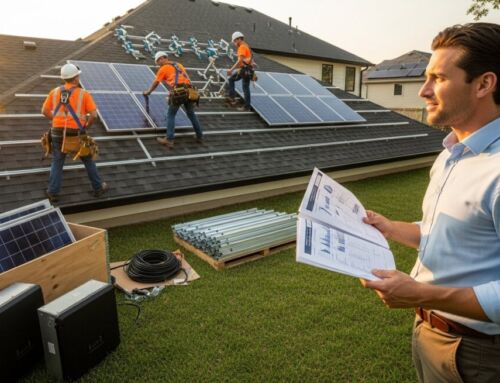
The solar installation process is designed to be straightforward and managed by professionals from start to finish. It begins with a detailed consultation and energy assessment of your home to understand your consumption and goals. This ensures the system is perfectly sized for your needs.
Next, the installer handles all the complex paperwork, including system design, securing permits, and applying for local incentives. Once approved, the physical installation is typically completed in just a few days, with minimal disruption to your daily life.
- Home Energy Assessment & Consultation: Review your bills, assess your roof, and discuss your goals.
- Custom System Design & Proposal: Receive a tailored plan showing system size, costs, savings, and financing options.
- Permits & Approvals: Your installer secures all necessary permits from your city and utility company.
- Panel Installation: The racking, panels, and inverter are installed on your roof and connected to your electrical panel.
- Inspections & Activation: Final inspections are done, and your utility grants permission to turn the system on.
Speaking with experienced installers can help you determine the best solar solution for your home. Compare solar quotes here or call to explore available options.
Signs Your Home May Be Ideal for Solar
While solar can work for many homes, some characteristics make the investment particularly advantageous. The most obvious sign is receiving high monthly electricity bills, as this means solar can displace expensive grid power and deliver greater savings.
Your roof itself is also a key factor. A south-facing roof with minimal shading from trees or other structures will generate the most energy. Furthermore, if you plan to stay in your home for the long term, you’ll have more time to enjoy the full financial benefits of your system.
- You have consistently high electricity bills.
- Your roof is in good condition and receives strong sunlight for most of the day.
- You have a suitable amount of unshaded roof space.
- You plan to own your home for 7+ years.
- You live in an area with good net metering policies from your utility.
- You are interested in increasing your home’s value and sustainability.
What Affects Solar Installation Costs
The total cost of your solar system is influenced by several key factors. The size of the system, measured in kilowatts (kW), is the biggest driver,a larger system for a bigger home costs more but also delivers more savings. The quality and efficiency of the panels and inverter you choose also play a role.
Installation complexity matters too. A simple, single-plane roof is easier to work on than a multi-angled roof with skylights. Most importantly, available government incentives and rebates can significantly reduce your net cost, making the investment much more attractive.
The cost of solar installation varies depending on your home and energy needs. Request personalized solar quotes or call to see what options are available.
Tips for Choosing a Reliable Solar Installer
Selecting the right installer is as important as choosing between a loan and a lease. A reputable company will guide you honestly through that decision, ensuring it aligns with your best interests. They are your partner for the next 25+ years of system performance.
Always check for proper licensing, insurance, and certifications like NABCEP. Read customer reviews and ask for references to gauge their reputation and quality of work. A trustworthy installer will be transparent about all costs, equipment, and the expected timeline.
- Choose an established local or national company with a proven track record.
- Verify they are properly licensed, insured, and certified.
- Read customer reviews and ask for local references.
- Review the warranties offered on both equipment and workmanship.
- Get detailed, written proposals from multiple companies to compare.
- Ensure they handle the entire process, including permits and utility interconnection.
Long-Term Benefits of Installing Solar Panels
The most immediate and compelling benefit is dramatic savings on your electricity bills. By generating your own power, you drastically reduce or even eliminate your monthly payment to the utility company. With a solar loan, once the loan is paid off, you enjoy nearly free electricity for the life of the system.
Solar panels also increase your home’s market value and appeal to future buyers. Studies consistently show homes with owned solar systems sell faster and for more money. You gain true energy independence, protecting yourself from rising utility rates while contributing to a cleaner environment for decades.
What is the main difference between a solar loan and a lease?
With a solar loan, you own the system. With a solar lease or PPA, a third-party company owns it. Ownership through a loan means you keep all financial incentives and increase your home’s value. A lease offers lower upfront cost but typically provides less long-term financial benefit.
Which option saves more money: a solar loan or lease?
Over the 25+ year lifespan of the system, a solar loan almost always saves more money. While you have a monthly loan payment, it’s often less than your old electric bill, and once the loan is paid off, your electricity from the panels is essentially free. Lease savings are usually more modest and fixed.
Can I get the federal tax credit with a solar lease?
No. The federal Investment Tax Credit (ITC) is only available to the system owner. With a lease, the leasing company owns the system, so they receive the tax credit. They may pass some savings on to you in the form of a lower monthly rate, but you do not claim the credit directly.
How does solar affect my home’s resale value?
An owned solar system typically increases your home’s resale value. Appraisers recognize that the new owner will have lower energy costs. A leased system can complicate a sale, as the new buyer must qualify for and agree to assume the lease, which can sometimes be a deterrent.
What happens to my solar panels if I move?
If you own the system (via a loan or cash), it becomes a valuable asset that you can sell with the home. If you have a lease or PPA, you must either buy out the remainder of the lease contract or transfer the agreement to the new homeowner, subject to their credit approval.
Are there maintenance costs with a solar loan?
Solar panels require very little maintenance, usually just occasional cleaning. Most systems come with a 25-year performance warranty and a 10+ year equipment warranty. With a loan where you own the system, any maintenance is your responsibility, but costs are typically minimal.
What if my solar panels don’t produce enough electricity?
Professional installers use sophisticated software to design a system that meets your historical energy needs. You will remain connected to the utility grid for times when your panels underproduce (like at night). This is called net metering, and it ensures you always have power.
Is my roof suitable for solar panels?
Most roof types in good condition can support solar panels. The ideal roof faces south, east, or west and has minimal shading. A qualified solar installer will perform a site assessment to evaluate your roof’s structure, angle, and sun exposure to confirm suitability.
Choosing between a solar loan and a lease is a significant decision that shapes your financial benefits for decades. By understanding the key differences in ownership, savings, and home value impact, you can confidently select the path that best fits your goals. The most important next step is to gather information specific to your home. We encourage you to compare detailed quotes from trusted, local installers to see your potential savings and make an informed choice for your energy future.