Solar Panels for Large Homes: Maximize Savings and Energy Independence
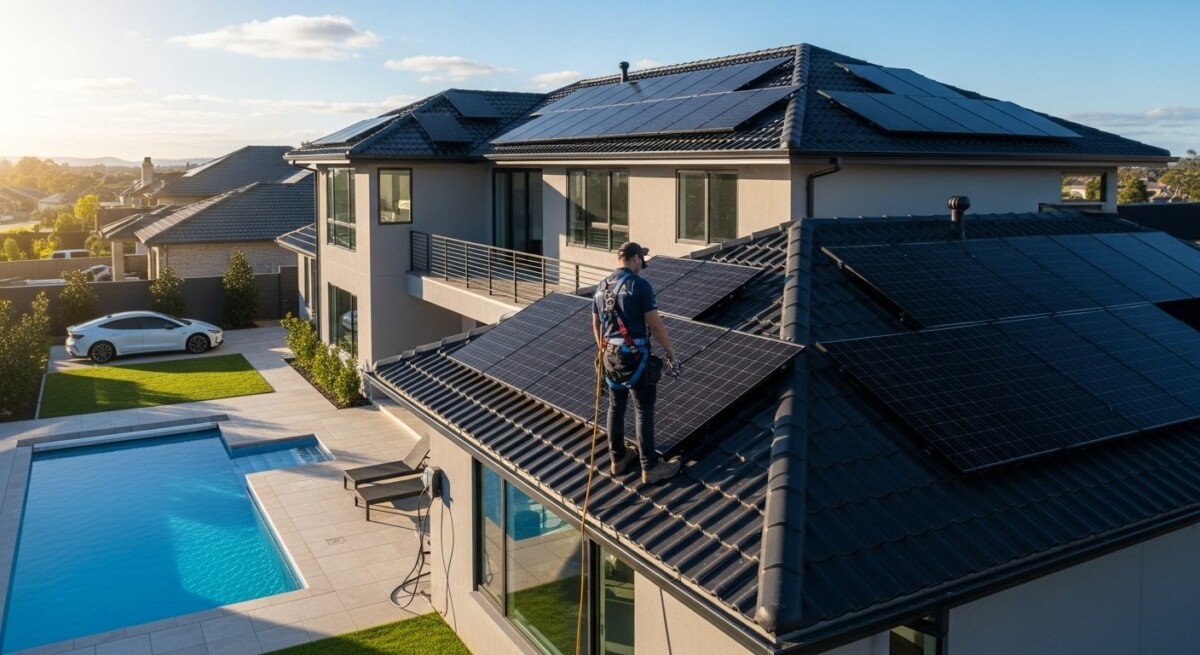
If you own a large home, you’ve likely watched your electricity bills climb steadily higher. Powering a spacious property with multiple systems can lead to significant monthly expenses. More homeowners are now looking at solar panels for large homes as a practical solution to reduce those bills and become less dependent on the utility grid. This move toward solar energy offers a path to long-term savings and greater control over your home’s power.
Understanding Solar Panels for Large Homes
Solar panels for large homes are systems specifically designed to meet the higher energy demands of bigger properties. They consist of photovoltaic (PV) panels installed on your roof or ground-mounted on your land. These panels capture sunlight and convert it into usable electricity for your home.
The system works by generating direct current (DC) electricity, which an inverter then converts to the alternating current (AC) that powers your appliances. Any excess electricity you produce can often be sent back to the grid for credits or stored in a home battery. This setup allows you to offset a substantial portion, if not all, of your energy consumption.
For large homes, the system size is typically larger, involving more panels to cover the significant energy needs. This ensures the system can handle everything from air conditioning and heating to pools, electric vehicle charging, and extensive lighting. A professional installer will design a system tailored to your specific usage patterns.
Why Solar Energy Is Becoming More Popular
The primary driver for most homeowners is financial. Electricity prices are unpredictable and tend to rise over time. By generating your own power, you lock in a lower, fixed cost for your energy for decades. This provides a powerful shield against future rate hikes from your utility company.
Beyond the budget, environmental concerns are a major factor. Solar power is a clean, renewable energy source that reduces your household’s carbon footprint. For many, the desire to contribute to a healthier planet for future generations is a compelling reason to make the switch.
The long-term savings potential is immense. While there is an upfront investment, the system pays for itself over time through slashed electric bills. Furthermore, government incentives like the federal solar tax credit can reduce the initial cost by a significant percentage, making the return on investment even more attractive.
If you are considering solar power for your home, comparing installation quotes can help you understand your options. Request a free solar quote or call to learn more.
Common Questions Homeowners Have About Solar
It’s normal to have questions before making such an important home upgrade. The most common concern is the initial cost. While not insignificant, it’s crucial to view it as a long-term investment with strong returns, especially when you factor in available financing options and incentives.
Homeowners also wonder if their roof is suitable. A south-facing roof with good sun exposure and minimal shading is ideal, but modern systems can be highly effective on east or west-facing roofs as well. An installer will assess your roof’s condition, angle, and sun exposure during a consultation.
Questions about system performance are also frequent. People want to know if solar will work on cloudy days and how long the panels will last. Today’s panels are efficient even in indirect light, and most come with 25-year performance warranties, guaranteeing they will still produce a high percentage of their original power decades later.
- How much will a solar system for my large home cost?
- Is my roof strong enough and positioned correctly for solar?
- What happens to my power when the sun isn’t shining?
- How long will the installation process take?
- Will solar panels increase my property value?
- What maintenance is required for a solar system?
How Solar Panel Installation Works
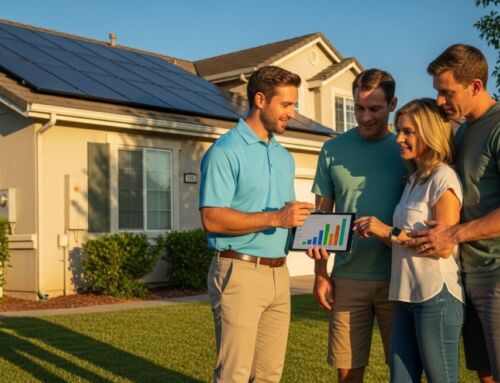
The installation process is managed by professionals from start to finish, making it straightforward for you. It begins with a detailed consultation and energy assessment. The installer will review your past electricity bills and discuss your goals to understand exactly how much power you need to generate.
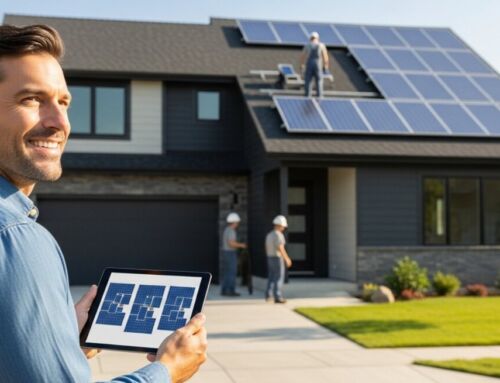
Next, they design a custom system for your home and handle all the necessary permits and paperwork with your local authorities and utility company. This step ensures your system is compliant with all regulations and eligible for net metering programs.
Once approved, the physical installation begins. This is typically a multi-day process where the racking, panels, inverter, and electrical connections are installed. Finally, a local inspector and your utility company will give their approval to connect your system to the grid, a process known as “Permission to Operate.”
- Home Energy Assessment & Consultation
- Custom System Design & Proposal
- Permitting & Utility Approvals
- Physical Installation of Equipment
- Final Inspections & System Activation
Speaking with experienced installers can help you determine the best solar solution for your home. Compare solar quotes here or call to explore available options.
Signs Your Home May Be Ideal for Solar
Certain characteristics make a home particularly well-suited for a solar panel installation. The most obvious is a high monthly electricity bill. If you’re consistently paying hundreds of dollars each month to your utility, solar can provide dramatic savings and a faster payback period.
Your roof’s condition and exposure are also key. A roof in good repair with a large, unshaded surface area is perfect. If you have land available, ground-mounted systems are also an excellent option for large properties, offering even more flexibility for optimal sun exposure.
Your future plans matter, too. If you plan to stay in your home for the next 7-10 years or more, you’ll have ample time to enjoy the financial benefits after the system pays for itself. Solar is an investment that rewards long-term homeowners.
- Consistently high monthly electricity bills.
- A roof with strong, direct sunlight for most of the day.
- Ample roof space or available land for a ground-mounted array.
- Plans to own your home for many years to come.
- A desire for energy security and independence.
- Interest in reducing your environmental impact.
What Affects Solar Installation Costs
The total cost of your solar system is influenced by several factors. The most significant is the system’s size, measured in kilowatts (kW). A larger home with higher energy needs will require a larger, more powerful system, which increases the upfront price.
The quality and type of equipment you choose also play a role. Premium, high-efficiency panels and inverters may cost more initially but can produce more electricity in a smaller space and often come with better warranties. The complexity of your roof or the need for a ground mount can affect labor costs.
Finally, local incentives dramatically change the net cost. The federal investment tax credit (ITC) allows you to deduct a percentage of the system cost from your federal taxes. Many states and utilities offer additional rebates or performance-based incentives, which a qualified installer will help you navigate.
The cost of solar installation varies depending on your home and energy needs. Request personalized solar quotes or call to see what options are available.
Tips for Choosing a Reliable Solar Installer
Selecting the right installer is as important as choosing the right equipment. A reputable company will guide you through the entire process, ensure proper installation, and be there for support years down the line. Start by looking for installers with strong local experience and a proven track record.
Always check for proper licensing and insurance. Ask about the warranties they offer,not just on the panels, but on their workmanship. A strong workmanship warranty protects you against installation errors for a decade or more.
The most important step is to compare multiple detailed quotes. Don’t just look at the bottom-line price; compare the system size, equipment brands, projected production, and warranty terms. This apples-to-apples comparison is the best way to ensure you get a fair deal on a high-quality system.
- Choose an installer with extensive local experience and positive customer reviews.
- Verify they are properly licensed, insured, and certified (e.g., NABCEP).
- Review the full scope of warranties on both equipment and installation work.
- Get and compare at least three detailed quotes before making a decision.
- Ask for references from past customers with similar homes.
- Ensure they handle all permitting and interconnection paperwork.
Long-Term Benefits of Installing Solar Panels
The most immediate and ongoing benefit is drastically lower electricity bills. Once your system is operational, you will draw much less power from the grid. Over 25+ years, this can add up to tens of thousands of dollars in savings, effectively paying for the system many times over.
Solar panels also increase your home’s market value. Studies consistently show that homes with solar panels sell faster and for more money than comparable homes without them. Buyers appreciate the lower operating costs and modern, efficient technology.
Beyond finances, you gain energy independence and environmental benefits. You become less vulnerable to power outages (especially with a battery) and utility rate increases. Simultaneously, you are directly reducing greenhouse gas emissions, making your large home a part of the climate solution.
How much can I really save with solar panels on a large home?
Savings depend on your local electricity rates, system size, and sun exposure. Homeowners with high consumption often see the most significant savings, potentially cutting their electric bill by 70-100%. Over the system’s lifetime, total savings can easily reach $30,000 to $60,000 or more, making it a sound financial investment.
What is the average cost of solar panels for a large home?
For a large home requiring a system between 10kW and 15kW, the gross cost before incentives typically ranges from $25,000 to $40,000. The federal tax credit can reduce this by 30%, and additional state or local incentives can lower the net cost further. Financing options like solar loans can make the upgrade affordable with little to no money down.
Do I need a new roof before installing solar?
It is highly recommended. Solar panels have a 25+ year lifespan, and removing them to replace a roof is an added expense. If your roof is over 10-15 years old or shows signs of wear, consider replacing it before installation. Your solar consultant can help assess your roof’s condition.
How long does the installation process take?
From signing a contract to system activation, the process typically takes between one to three months. The physical installation on your roof usually only takes a few days. Most of the timeline is for designing the system, securing permits, and scheduling utility approvals.
What happens during a power outage?
For safety reasons, standard grid-tied solar systems automatically shut off during an outage unless paired with a battery storage system. A solar battery, like a Tesla Powerwall or similar, stores excess energy and can provide backup power to critical circuits in your home when the grid is down.
Are there financing options available for solar?
Yes, several options exist. These include solar loans (which allow you to own the system with monthly payments), solar leases or Power Purchase Agreements (PPAs), and home equity loans. A solar loan is often the most popular choice as it lets you claim all incentives and own the asset outright.
Investing in solar panels for your large home is a significant decision that offers substantial rewards. It provides a practical way to take control of your energy costs, increase your property’s value, and contribute to a sustainable future. The best way to start is with accurate, personalized information. By comparing quotes from trusted, local installers, you can make a confident choice that will benefit your home and family for decades to come.