Solar Proposal Comparison Guide: Find Your Best Deal

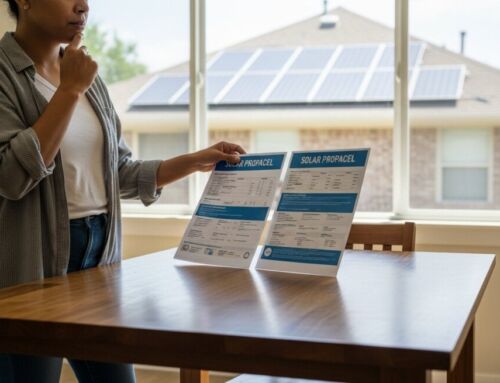
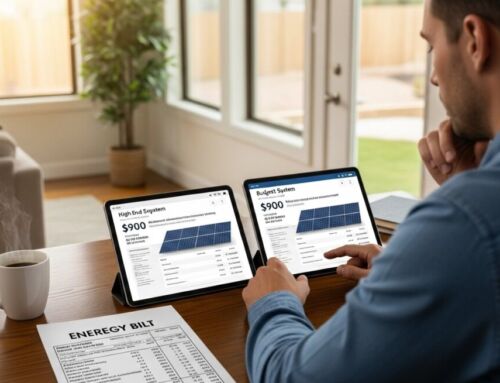
You have gathered multiple solar proposals, and now you face a stack of papers filled with numbers, equipment names, and fine print. Each salesperson claims their offer is the best. Without a clear method to compare these proposals side by side, you risk overpaying by thousands of dollars or locking into a system that underperforms. This solar proposal comparison guide walks you through the exact steps to evaluate each bid, spot hidden costs, and choose the system that delivers real long-term value for your home.
Why a Structured Comparison Matters
Solar proposals look different from one installer to the next. One company might quote a 6.4 kW system with microinverters, while another proposes a 7.2 kW system with a string inverter and optimizers. The monthly payment estimates may appear similar, but the total cost, equipment quality, and warranty terms vary dramatically. Without a standardized comparison method, you end up comparing apples to oranges.
A structured approach protects you from three common pitfalls. First, you avoid focusing only on the lowest monthly payment without checking the total system cost or financing terms. Second, you prevent getting swayed by a single attractive feature, like a free panel upgrade, while ignoring a weak warranty. Third, you ensure that every proposal gets judged on the same criteria, so the best overall value rises to the top. This guide gives you those criteria and shows you how to apply them.
Step 1: Normalize the System Size and Energy Output
The first step in any solar proposal comparison is to understand exactly what each installer is offering in terms of capacity and expected production. System size is measured in kilowatts (kW), and annual energy output is measured in kilowatt-hours (kWh). These two numbers form the foundation of every comparison.
Create a simple table with three columns: installer name, system size in kW, and estimated annual kWh production. If one proposal shows 6.8 kW with a production estimate of 9,200 kWh per year, and another shows 7.4 kW with 9,800 kWh per year, you can already see that the larger system does not produce proportionally more energy. This may indicate different panel efficiency, orientation assumptions, or shading factors. Ask each installer to explain their production modeling assumptions. A reputable company will share the software tool they used (such as Aurora or Helioscope) and the key inputs like roof pitch, azimuth, and shade analysis.
Check the Panel Wattage and Count
Two proposals with the same total system size may use different numbers of panels. A 6.0 kW system could be built with 15 panels at 400 watts each, or 20 panels at 300 watts each. Fewer panels usually mean higher efficiency panels, which cost more per watt but take up less roof space. More panels mean lower efficiency panels that may be cheaper but require more roof area. Choose the configuration that matches your roof dimensions and your budget. If your roof has limited south-facing space, the higher-efficiency option is often the better choice.
Step 2: Compare Equipment Quality and Warranties
Solar panels, inverters, and racking systems vary widely in quality, durability, and manufacturer support. A proposal that uses tier-1 panels from a brand like REC, SunPower, or LG generally carries a stronger warranty and better long-term degradation rates than a proposal using lesser-known brands. Similarly, microinverters from Enphase or string inverters from SolarEdge have established track records, while off-brand inverters may pose reliability risks.
Create a second comparison table listing the key equipment components for each proposal:
- Solar panel brand and model (check the wattage, efficiency rating, and degradation guarantee)
- Inverter type and brand (microinverters, string inverter with optimizers, or hybrid inverter)
- Racking and mounting system (flush mount, tilted, or ballasted for flat roofs)
- Manufacturer warranties (panel product warranty, panel performance warranty, inverter warranty)
- Workmanship warranty (offered by the installer, typically 10 to 25 years)
A 25-year panel performance warranty that guarantees at least 92% output after 25 years is the industry standard. Avoid proposals that offer only a 10-year or 15-year performance warranty. The inverter warranty should be at least 12 years, with 20 or 25 years available from premium brands. Workmanship warranties matter because they cover labor and roof penetration leaks. An installer offering only a 2-year workmanship warranty may not be confident in their installation quality.
Step 3: Decode the Financing and Cash Price
Solar proposals often show two sets of numbers: the cash price and the financed price. The cash price is the total cost if you pay upfront. The financed price includes interest, loan origination fees, and dealer fees that inflate the total. Many installers quote a financed price that includes a dealer fee of 20% to 30%, which is rolled into the loan amount. This means you pay interest on that inflated number for the entire loan term.
Always ask for the cash price first. Compare cash prices across all proposals to see which installer offers the best base cost. Then evaluate financing options separately. Some key financing terms to compare include:
- APR (Annual Percentage Rate): Lower is better, but watch for variable rates that can increase over time.
- Loan term: 10, 15, 20, or 25 years. Longer terms mean lower monthly payments but more total interest paid.
- Dealer fee percentage: This is added to the cash price to calculate the financed amount. Ask for the dealer fee in writing.
- Prepayment penalty: Some loans charge a fee if you pay off the loan early. Avoid these if possible.
- Monthly payment: Compare this across proposals, but only after normalizing the loan term and APR.
A proposal that shows a low monthly payment may have a 25-year term with a high APR and a 30% dealer fee. Another proposal with a slightly higher monthly payment over 15 years at a low APR could save you tens of thousands of dollars in interest. Use a solar loan calculator to run the numbers yourself. NewSolarQuote offers free tools to help you model these scenarios. In our guide on solar proposal breakdown, we explain how to spot these hidden costs and negotiate better terms.
Step 4: Evaluate Incentives and Net Metering Assumptions
Every solar proposal should include a line item for the federal Investment Tax Credit (ITC), which currently allows you to deduct 30% of the total system cost from your federal taxes. Some proposals assume you will use the ITC to reduce the loan principal, while others assume you will keep the credit as a cash rebate. Clarify which assumption each installer is using, because it affects the net cost calculation.
State and local incentives vary widely. If your utility offers net metering, the proposal should show how excess energy credits are calculated. Some utilities credit you at the full retail rate, while others credit at a lower wholesale rate. Ask the installer to provide a net metering estimate based on your specific utility rate plan. A proposal that assumes full retail net metering may overstate your savings if your utility uses a different structure.
Step 5: Read the Fine Print on Escalators and True-Up
Many solar loans and power purchase agreements (PPAs) include an annual escalator clause that increases your payment by a fixed percentage each year, typically 0.5% to 3.9%. A proposal that shows a low starting payment but includes a 3.9% annual escalator will cost significantly more in years 10 through 25. Compare the total cost over the full loan term, not just the first year.
True-up clauses also deserve scrutiny. Some PPAs require you to pay the difference if your system underproduces compared to the estimate. Others offer a production guarantee that credits you if the system falls short. Look for proposals that include a production guarantee with a clear payout formula, such as $0.10 per kWh shortfall. Avoid proposals that place all the underproduction risk on you.
Step 6: Assess the Installer’s Reputation and Service
Equipment and pricing are only part of the equation. The installer’s reputation, customer service, and post-installation support determine whether your solar experience is smooth or stressful. Research each company’s reviews on platforms like Google, Yelp, and the Better Business Bureau. Look for patterns in complaints: delayed installations, poor communication, or unresolved warranty claims.
Ask each installer for references from recent installations in your area. Call two or three references and ask about the installation timeline, the cleanliness of the work, and how the company handled any issues. A proposal from a company with excellent reviews and a local office may be worth paying a premium over a cheaper bid from an out-of-state installer with poor reviews.
Step 7: Calculate the True Cost Per Watt
The cost per watt is a simple metric that allows you to compare proposals regardless of system size. Divide the total cash price (before incentives) by the system size in watts. For example, a $21,000 system that is 6,000 watts (6.0 kW) costs $3.50 per watt. A $24,000 system that is 7,500 watts costs $3.20 per watt. The lower cost per watt generally indicates a better deal, but only if the equipment quality and warranties are comparable.
National averages for residential solar range from $2.50 to $3.50 per watt before incentives. Prices vary by region, roof complexity, and equipment choices. If a proposal comes in well below $2.50 per watt, question whether the installer is using substandard equipment or cutting corners on labor. If a proposal is above $4.00 per watt, ask for a detailed breakdown of what justifies the premium.
Bringing It All Together
After running through these seven steps, you should have a clear picture of which proposal offers the best combination of price, equipment quality, warranty, and installer reliability. Create a final comparison table that ranks each proposal on cost per watt, total financed cost, annual production estimate, warranty length, and installer rating. The proposal that scores highest across these categories is your winner.
Remember that the cheapest upfront price is not always the best long-term value. A slightly more expensive system with premium panels, a robust inverter, and a strong warranty will produce more energy over its lifetime and require fewer repairs. Use this solar proposal comparison guide as your reference every time you review a new bid, and you will make a confident, informed decision that saves you money for decades.