What Determines Solar Installation Pricing for Maximum Savings
You open your monthly electricity bill and wince. The rate keeps climbing, and you wonder if there is a way to gain more control over your energy costs. That is why so many homeowners in the United States are now searching for what determines solar installation pricing before making a switch. Understanding these factors can help you reduce your electricity bills, gain energy independence, and make a sound long-term investment.
Understanding What Determines Solar Installation Pricing
Solar installation pricing refers to the total cost of designing, procuring, and installing a photovoltaic system on your property. This price is not a one-size-fits-all number. Instead, it depends on your home’s unique characteristics, your energy consumption, and the equipment you choose.
At its core, a solar system converts sunlight into electricity through panels, an inverter, and mounting hardware. Professional installers assess your roof, measure sun exposure, and size the system to match your utility bills. The final price reflects the complexity of that process as well as the quality of the components used.
More homeowners are considering solar because it offers a way to lock in predictable energy costs. When you understand what determines solar installation pricing, you can compare quotes with confidence and avoid costly surprises.
Key Pricing Components Explained Simply
The biggest pieces of your solar price are the panels, the inverter, labor, and permits. Premium panels with higher efficiency cost more upfront but produce more electricity over their lifetime. Similarly, a microinverter system may cost more than a string inverter but can perform better on shaded roofs.
Why Solar Energy Is Becoming More Popular
Rising electricity prices are the number one reason families go solar. Every year, utility rates increase, making grid power more expensive. Solar panels offer a hedge against those hikes by generating your own electricity at a fixed cost.
Environmental concerns also drive interest. Solar energy produces no emissions and reduces your carbon footprint. Many homeowners feel good about shrinking their household’s impact on the planet.
Long-term savings remain the most compelling motivator. While the upfront investment can seem high, most solar owners recoup their costs within six to ten years through lower bills. After that, electricity from your panels is essentially free for the rest of the system’s life.
If you are considering solar power for your home, comparing installation quotes can help you understand your options. Request a free solar quote or call to learn more.
Common Questions Homeowners Have About Solar
When you first explore solar, several questions probably come to mind. The most common concern is cost: how much will a system actually cost for my home? The answer depends on your energy usage, roof size, and local labor rates.
Another frequent question is whether your roof is suitable. Solar panels work best on south-facing roofs with little shade. However, east- and west-facing roofs can also produce good results, and modern microinverters handle partial shade well.
Homeowners also wonder about system performance during cloudy days or winter months. Solar panels still generate electricity in diffuse light, though at a reduced rate. Net metering policies in many states let you earn credits for excess power sent to the grid, which you can use later.
- How long do solar panels last? Most panels come with a 25-year performance warranty and continue producing power beyond that.
- Will solar increase my home value? Yes, studies show homes with solar sell for a premium.
- Do I need a battery? Not necessarily, but batteries provide backup power during outages.
- What happens if I move? You can transfer the solar lease or include the system in the home sale.
How Solar Panel Installation Works
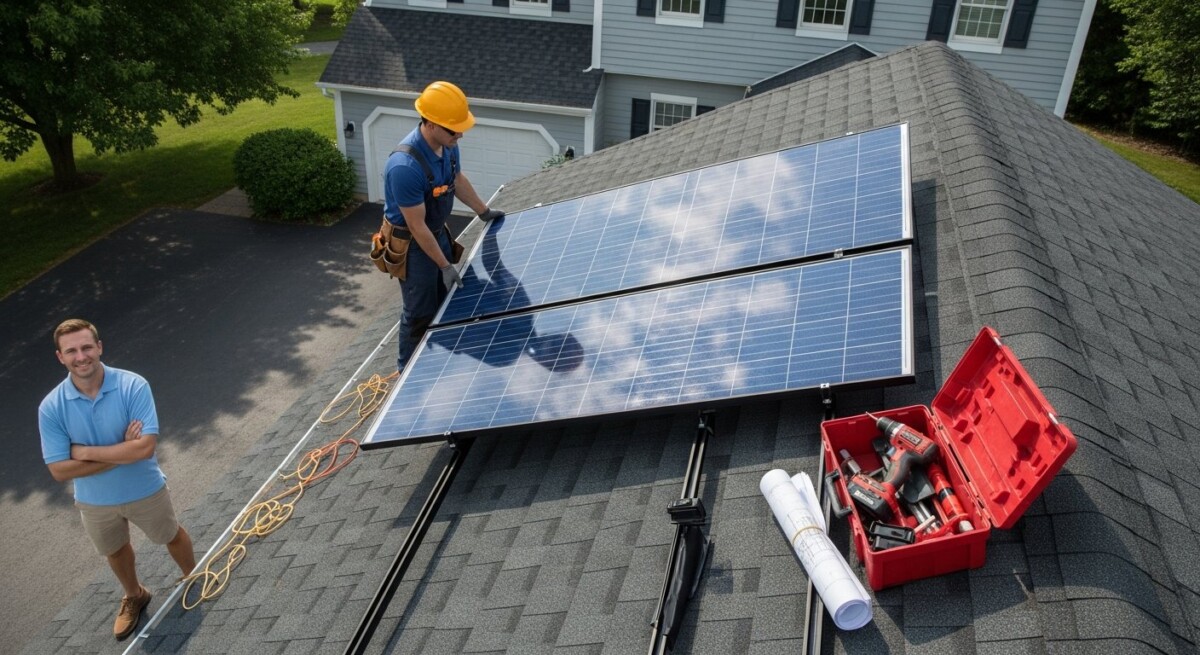
The installation process is simpler than many homeowners expect. A professional crew typically completes the job in one to three days, depending on system size and roof complexity.
Before any panels go up, your installer conducts a home energy assessment. They review your past electricity bills, inspect your roof, and measure sunlight exposure. This data drives the system design.
Once the design is finalized, your installer handles all permits and approvals with your local utility and building department. They then mount the panels, connect the inverter, and wire the system to your main electrical panel. After a final inspection, the system is activated and starts generating power.
- Home energy assessment to evaluate your needs and roof condition.
- Custom system design tailored to your roof and energy goals.
- Permit applications and utility interconnection paperwork.
- Panel installation, inverter setup, and electrical connections.
- Final inspection and system activation.
Speaking with experienced installers can help you determine the best solar solution for your home. Compare solar quotes here or call to explore available options.
Signs Your Home May Be Ideal for Solar
Not every home is perfectly suited for solar, but many are. The most important factor is sunlight exposure. If your roof gets direct sun for most of the day, you will see strong energy production.
High electricity bills are another strong indicator. If you pay more than $100 per month on average, solar can likely reduce that amount significantly. Homes in states with high utility rates benefit even more.
If you plan to stay in your home for at least five more years, solar becomes a solid financial move. The longer you own the system, the more you save.
- Unobstructed roof with southern exposure.
- Monthly electricity bills above $100.
- Roof in good condition with at least 15 years of life remaining.
- Plan to remain in the home for five years or more.
- Access to net metering or other local incentives.
What Affects Solar Installation Costs
System size is the largest driver of cost. A larger system that covers 100% of your electricity needs will cost more than a smaller one that covers only a portion. Your installer will help you find the right balance between upfront price and long-term savings.
Equipment quality also matters. Premium panels from brands like SunPower or REC are more efficient and often come with stronger warranties. Lower-cost panels may save money now but produce less energy over time.
Installation complexity adds to the price. A steep roof, multiple stories, or tile roofing requires more labor and specialized mounting hardware. Local incentives, such as state rebates or the federal Investment Tax Credit, can lower your net cost significantly.
The cost of solar installation varies depending on your home and energy needs. Request personalized solar quotes or call to see what options are available.
Tips for Choosing a Reliable Solar Installer
Finding the right installer is just as important as choosing the right equipment. A reputable company will guide you through the process, handle permits, and stand behind their work.
Start by reviewing each installer’s experience and certifications. Look for companies with NABCEP-certified designers and a track record of installations in your area. Check their warranty offerings: a solid workmanship warranty protects you if something goes wrong.
Reading customer reviews on platforms like Google and SolarReviews gives you a sense of real-world experiences. Finally, always compare multiple quotes. Prices and equipment recommendations can vary widely between installers.
- Verify installer licensing and insurance.
- Ask about panel and inverter warranty terms.
- Read recent customer reviews and testimonials.
- Request at least three quotes for comparison.
- Ask about financing options, including solar loans and leases.
Long-Term Benefits of Installing Solar Panels
The most immediate benefit is lower electricity bills. Once your system is operational, you generate your own power and buy less from the utility. Over 25 years, those savings can total tens of thousands of dollars.
Solar panels also increase your home’s resale value. According to Zillow, homes with solar sell for about 4% more than comparable homes without it. That means your investment pays off even if you move.
Energy independence is another powerful advantage. With solar, you are less affected by utility rate increases and grid failures. Adding a battery gives you backup power during outages, providing peace of mind.
Finally, solar reduces your household’s environmental impact. Each kilowatt-hour of solar electricity avoids carbon emissions that would come from fossil fuel plants. For many homeowners, that is a meaningful contribution to a cleaner future.
Frequently Asked Questions
How much does a typical solar installation cost?
The average cost for a residential solar system in the United States ranges from $15,000 to $25,000 before incentives. After the federal tax credit, that price drops by 30%. Your final cost depends on system size, equipment, and local labor rates.
What is the payback period for solar panels?
Most homeowners recoup their investment in six to ten years through lower electricity bills. The exact payback period depends on your energy usage, local utility rates, and available incentives. After that, your electricity is essentially free for the remaining life of the system.
Do solar panels work in cloudy weather?
Yes, solar panels still generate electricity in cloudy conditions, though at a reduced output. Modern panels are designed to capture diffuse sunlight. Net metering policies allow you to bank excess energy from sunny days to use during cloudy periods.
Can I install solar panels myself to save money?
DIY solar is possible but risky. Improper installation can void equipment warranties, create safety hazards, and fail inspection. Professional installers ensure your system meets building codes and qualifies for incentives, which often offsets the labor cost.
How long do solar panels last?
Most solar panels come with a 25-year performance warranty, but they can produce electricity for 30 years or more. Their output gradually declines, typically around 0.5% per year. Even after 25 years, panels usually operate at 85% or more of their original capacity.
What happens if my roof needs replacement after solar is installed?
If your roof will need replacement within the next 10 years, it is wise to replace it before installing solar. Removing and reinstalling panels adds cost. Many installers offer roof-integrated mounting systems that simplify future roof work.
Are there financing options for solar?
Yes, you can choose from solar loans, leases, or power purchase agreements. Loans let you own the system and claim incentives, while leases require no upfront cost but offer lower long-term savings. Your installer can explain which option fits your financial situation.
Will solar increase my property taxes?
In most states, solar panel installations are exempt from property tax assessments. That means your home’s value can increase without raising your tax bill. Check your state’s specific exemption policy to be sure.
Understanding what determines solar installation pricing is the first step toward making a smart energy investment. By comparing multiple quotes, you can find a system that fits your budget, meets your energy needs, and delivers long-term savings. Take the next step today and request quotes from trusted local installers to see how much you can save.