How Long Solar Installation Takes and Saves You Money
You open your monthly electric bill and wince. The cost keeps climbing, and you wonder if there is a way to take control. You are not alone,thousands of homeowners are now searching for how long solar installation usually takes so they can start lowering their monthly expenses and reduce their reliance on the power grid. The good news is that the process is faster than most people think, and the savings can begin within weeks of signing a contract.
Understanding how long solar installation usually takes
Solar panel installation is the process of mounting photovoltaic panels on your roof or property to convert sunlight into usable electricity for your home. The system connects to your existing electrical panel and, in many cases, to the utility grid so you can earn credits for excess power.
The entire timeline from signing a contract to flipping the switch generally ranges from one to three months. This window includes site evaluation, system design, permit approvals, equipment ordering, physical installation, and final inspection by your local utility or city. Most homeowners are surprised that the actual rooftop work often takes only one to three days.
Why are more families making the switch? Because solar energy turns a fixed rooftop into a mini power plant that can slash electricity bills by 50 to 90 percent over the system’s 25-year lifespan. With federal tax credits and state incentives, the upfront cost has never been more accessible.
Why Solar Energy Is Becoming More Popular
Electricity rates have risen steadily across the United States, and many homeowners see little recourse except to pay more each year. Solar offers a way to lock in predictable energy costs and gain some control over a household budget.
Environmental concerns also play a major role. Solar power produces no carbon emissions or air pollutants, which helps families reduce their carbon footprint while still enjoying modern comforts. In our guide on how long solar installation takes from start to finish, we explain the full journey from quote to activation.
Beyond savings and sustainability, solar energy provides a sense of independence. When paired with a battery system, your home can keep running during grid outages, giving you peace of mind during storms or peak demand events.
If you are considering solar power for your home, comparing installation quotes can help you understand your options. Request a free solar quote or call to learn more.
Common Questions Homeowners Have About Solar
Most homeowners start with the same basic questions. They want to know whether solar will work on their roof, how much it will cost, and whether the system will perform well on cloudy days.
Fortunately, modern solar panels are efficient even in indirect sunlight, and professional installers use software to model your home’s specific sun exposure. The upfront cost has dropped dramatically over the past decade, and financing options make it possible to start saving from month one with little or no money down.
- Will solar panels work on my roof if it is shaded?
- How long do solar panels last?
- What happens if I move before the system is paid off?
- Do I need a new roof before installing solar?
- Will solar work during a power outage?
- How much maintenance do solar panels require?
How Solar Panel Installation Works
The installation process follows a clear sequence designed to ensure safety, performance, and compliance with local building codes. A trustworthy installer will walk you through each stage and keep you informed along the way.
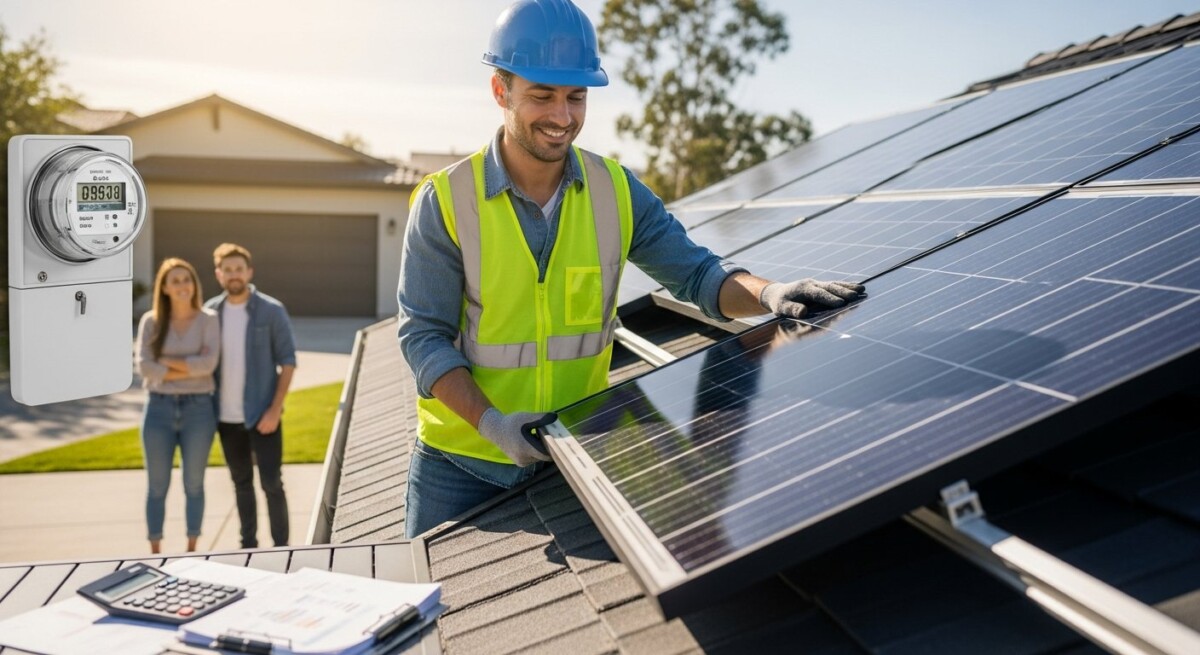
After you sign a contract, the installer schedules a site visit to measure your roof, inspect its condition, and evaluate shading. Then they design a custom system, submit permit applications, and order the equipment. Once permits are approved, the physical installation typically takes one to three days.
- Home energy assessment and roof evaluation
- Custom system design and equipment selection
- Permit applications and utility approvals
- Panel and inverter installation on your roof
- Final inspection and system activation
Speaking with experienced installers can help you determine the best solar solution for your home. Compare solar quotes here or call to explore available options.
Signs Your Home May Be Ideal for Solar
Not every home is a perfect candidate, but most can benefit from solar energy with the right system design. Installers look for a few key factors that make a property well-suited for panels.
If your roof faces south, west, or east and receives direct sunlight for most of the day, you are in a strong position. Even homes with partial shade can still save money using newer microinverter technology that optimizes each panel individually.
- Your roof gets at least five hours of direct sunlight per day
- Your monthly electricity bill is $100 or more
- You have at least 300 square feet of usable roof space
- Your roof is in good condition or recently replaced
- You plan to stay in your home for at least five more years
- Your state or utility offers net metering or solar incentives
What Affects Solar Installation Costs
The price of a solar system varies based on the size of the system, the quality of the equipment, and the complexity of your roof. A larger home with higher energy usage will need more panels, which increases the total cost but also delivers greater long-term savings.
Equipment choices matter, too. Premium panels and inverters cost more upfront but often come with better warranties and higher efficiency. Installation complexity,such as a steep roof, multiple roof angles, or older electrical panels,can also add to the labor cost.
Local incentives can significantly reduce your out-of-pocket expense. The federal Investment Tax Credit currently allows you to deduct 30 percent of the system cost from your federal taxes, and many states offer additional rebates or performance-based incentives.
The cost of solar installation varies depending on your home and energy needs. Request personalized solar quotes or call to see what options are available.
Tips for Choosing a Reliable Solar Installer
Selecting the right installer is just as important as choosing the right equipment. A reputable company will help you avoid common pitfalls like undersized systems, poor roof mounting, or missed incentives.
Start by getting at least three quotes from licensed, insured installers with a proven track record in your area. Look for companies that have been in business for several years and have positive reviews on platforms like Google, Yelp, or the Better Business Bureau.
- Verify the installer’s license and insurance
- Ask about equipment warranties and workmanship guarantees
- Read recent customer reviews and request references
- Compare at least three detailed quotes side by side
- Confirm the installer handles permits and utility paperwork
- Check if they offer monitoring and ongoing support
Long-Term Benefits of Installing Solar Panels
Once your system is active, the savings begin immediately. Most homeowners see their electric bills drop by 50 to 90 percent, and many completely eliminate their monthly power bills during sunny months.
Over the 25- to 30-year lifespan of a solar system, the cumulative savings can reach tens of thousands of dollars. Solar panels also increase your home’s resale value,studies show that homes with solar sell for about 4 percent more than comparable non-solar homes.
On top of financial gains, you gain energy independence and reduce your household’s environmental impact. Every kilowatt-hour of solar power avoids the carbon emissions that would have come from burning coal or natural gas, making your home part of the clean energy solution.
How long does it take to install solar panels on a house?
The physical installation of panels on your roof usually takes one to three days once permits are approved. The entire process from contract signing to system activation typically takes one to three months, depending on your local permitting office and utility company.
Can solar panels be installed in one day?
In many cases, yes. A standard residential installation on a simple roof can be completed in a single day by a professional crew. However, larger systems or complex roof layouts may require two or three days for the installation phase.
What is the biggest delay in solar installation?
Permit approvals and utility interconnection reviews are the most common delays. Some cities process permits in a week, while others take several weeks. Your installer should handle these steps and keep you updated on progress.
Do I need to be home during solar panel installation?
You do not need to be home for the entire installation, but you should be available at the start to let the crew in and at the end for a quick walkthrough. Most installers will coordinate with you to ensure access to your attic and electrical panel.
Will solar panels damage my roof?
Professional installers use mounting systems designed to protect your roof and prevent leaks. When installed correctly, solar panels can actually protect the covered portion of your roof from weather and UV exposure. Always choose an installer with a strong workmanship warranty.
How long does solar panel installation take for a 2000 square foot home?
A 2000-square-foot home typically needs a 6 to 8 kilowatt system, which usually takes one to three days to install. The total timeline from contract to activation remains one to three months, as permitting and utility approvals do not depend on home size.
What happens after solar panels are installed?
After installation, your local building department or utility must inspect the system and approve it for operation. Once approved, your installer will activate the system, and you will start generating solar power immediately. Your utility may also install a net meter to track energy credits.
Solar installation is a straightforward process that delivers lasting value for your home and budget. By understanding how long solar installation usually takes and what to expect, you can move forward with confidence. The best next step is to compare quotes from multiple installers to find the right system at the right price for your home.