What Affects Solar Panel Output and How to Maximize Savings
You open your monthly electricity bill and feel that familiar sting. Rates keep climbing, and you wonder if there is a way to take control. That is why so many homeowners start searching for what affects solar panel output,they want to know if solar energy can actually lower their bills and free them from the grid.
Understanding what affects solar panel output is the first step toward making a smart investment in your home. When you know how sunlight, temperature, shading, and equipment choices influence energy production, you can make informed decisions that maximize your long-term savings.
Understanding what affects solar panel output
Solar panel output refers to the amount of electricity your system generates under real-world conditions. It is measured in kilowatt-hours (kWh), and the higher the output, the more of your home’s energy needs you can cover.
Several factors determine how much power your panels produce. Sunlight intensity, roof orientation, panel efficiency, temperature, and even dirt accumulation all play a role. By understanding these variables, you can work with a professional installer to design a system that performs well for your specific home.
Key factors that influence solar production
The most obvious factor is sunlight. Panels need direct, unobstructed sunlight for peak performance. Shading from trees, chimneys, or nearby buildings can reduce output significantly. Even partial shade on one panel can drag down the performance of an entire string of panels if your system lacks modern optimizers or microinverters.
Temperature also matters. Solar panels actually work more efficiently in cooler weather, even though they need sunlight. On very hot days, output can drop by 10,25 percent depending on the panel type. This is why high-quality panels with better temperature coefficients are worth considering in warmer climates.
Panel orientation and tilt angle affect how much sunlight your system captures throughout the day and across seasons. In the United States, south-facing roofs at a 30,40 degree tilt typically produce the most energy. East and west-facing roofs can still work well but may generate less total power.
Why Solar Energy Is Becoming More Popular
Rising electricity prices are pushing more homeowners to explore solar. The average residential electricity rate has increased steadily over the past decade, and there is no sign of it slowing down. Solar offers a way to lock in a lower, predictable energy cost for 25 years or more.
Environmental concerns are another major driver. People want to reduce their carbon footprint and contribute to a cleaner future. Generating your own electricity from sunlight produces no emissions, which is one of the most impactful steps a household can take.
Long-term savings are the real headline. A well-designed solar system can pay for itself in 6,10 years and continue delivering free electricity for decades after that. Combined with federal tax credits and local incentives, the financial case for solar has never been stronger.
If you are considering solar power for your home, comparing installation quotes can help you understand your options. Request a free solar quote or call to learn more.
Common Questions Homeowners Have About Solar
Many homeowners worry about the upfront installation cost. The good news is that prices have dropped dramatically over the past decade, and financing options make solar accessible to more households. Federal and state incentives can reduce your net cost by 30 percent or more.
Roof suitability is another frequent concern. Not every roof is ideal, but most can accommodate solar panels. Factors like age, material, and structural integrity matter. A professional installer will evaluate your roof and recommend solutions, including ground-mounted systems if needed.
Performance in cloudy or winter weather also comes up often. Solar panels still generate electricity on cloudy days,just at a reduced rate. Net metering policies allow you to bank excess production from sunny months to use during darker periods, smoothing out your annual savings.
- How much will solar actually save me each month?
- What happens if my roof needs replacement after panels are installed?
- Do I need a battery backup system?
- How long do solar panels really last?
- Will solar work with my current electric meter?
- What maintenance do solar panels require?
How Solar Panel Installation Works
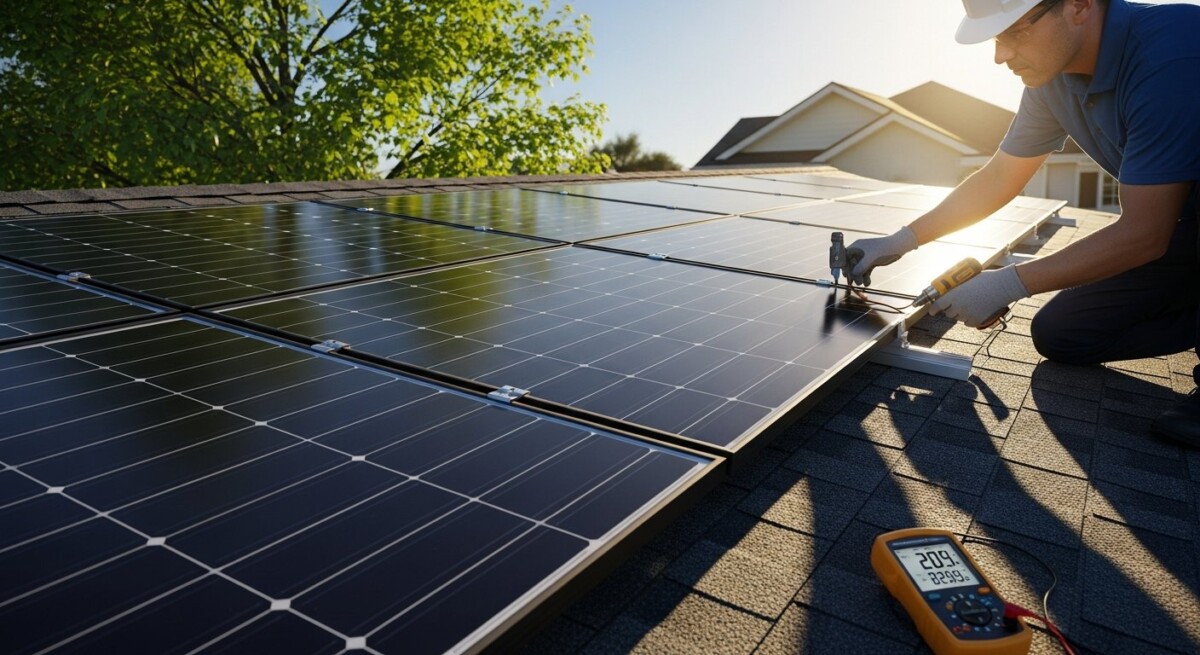
The installation process is more straightforward than most homeowners expect. It starts with a home energy assessment, where an installer reviews your electricity usage, roof condition, and sunlight exposure. This data helps them design a system tailored to your needs.
Once you approve the design, the installer handles permits, paperwork, and approvals from your utility company. This step can take a few weeks, but a good installer manages it on your behalf. After approvals are in place, the physical installation usually takes one to three days.
- Home energy assessment and usage analysis
- Custom system design and equipment selection
- Permit applications and utility approvals
- Panel installation, wiring, and inverter setup
- Final inspection and system activation
Speaking with experienced installers can help you determine the best solar solution for your home. Compare solar quotes here or call to explore available options.
Signs Your Home May Be Ideal for Solar
Certain conditions make a home especially well-suited for solar panels. Strong, consistent sunlight exposure is the most important factor. If your roof faces south, west, or east with minimal shading, your system will produce more energy and deliver better returns.
High electricity bills are another strong indicator. If you pay more than $100 per month on average, solar can likely reduce or eliminate that expense. Homes with older, inefficient appliances or electric heating often see the biggest savings.
- Unshaded roof with good sun exposure for most of the day
- Electricity bills consistently above $100 per month
- Roof in good condition with at least 15,20 years of life remaining
- You plan to stay in your home for at least 5,7 years
- Your state offers net metering or solar incentives
- You have a south-facing roof slope between 20 and 45 degrees
What Affects Solar Installation Costs
System size is the biggest cost driver. Larger systems that generate more electricity naturally cost more upfront, but they also produce greater savings over time. The right size depends on your energy usage, roof space, and budget.
Equipment quality matters too. Premium panels and inverters cost more but offer higher efficiency, better warranties, and longer lifespans. Cheaper components might save you money now but could lead to lower output or earlier replacement. In our guide on solar panel repair technician, we explain how proper installation and quality parts reduce future maintenance needs.
Installation complexity also affects pricing. Steep roofs, unusual roof materials, or electrical panel upgrades can add to the labor cost. Local incentives and rebates can offset these expenses significantly, so it pays to research what is available in your area.
The cost of solar installation varies depending on your home and energy needs. Request personalized solar quotes or call to see what options are available.
Tips for Choosing a Reliable Solar Installer
Choosing the right installer is just as important as choosing the right equipment. A reputable company will design a system that maximizes output and savings while avoiding common pitfalls. Look for installers with several years of experience and strong reviews from local homeowners.
Warranties are your safety net. A good installer offers a workmanship warranty of at least 10 years, and the equipment should come with performance and product warranties of 25 years. Never skip reading the fine print on what is covered.
- Verify the installer is licensed, bonded, and insured
- Ask for references from recent customers in your area
- Compare at least three quotes before making a decision
- Check online reviews on Google, Yelp, and the Better Business Bureau
- Ensure the warranty covers both equipment and labor
- Ask about monitoring tools so you can track your system’s output
Long-Term Benefits of Installing Solar Panels
Lower electricity bills are the most immediate benefit. Once your system is paid off, you essentially generate free electricity for the remaining life of the panels. Over 25 years, that can add up to tens of thousands of dollars in savings.
Your home value also increases. Studies show that homes with solar panels sell for a premium compared to similar homes without them. Buyers recognize the value of lower utility costs and are often willing to pay more.
Energy independence is another powerful advantage. Generating your own power protects you from future rate hikes and grid outages if you add battery storage. And every kilowatt-hour you produce from sunlight reduces your carbon footprint, helping create a cleaner environment for future generations.
Frequently Asked Questions
Do solar panels work on cloudy days?
Yes, solar panels still generate electricity on cloudy days, just at a reduced output,typically 10 to 25 percent of their peak capacity. Modern panels are designed to capture diffuse sunlight, so you still save money even when the sun isn’t blazing. Net metering helps you use credits from sunny days to cover cloudy periods.
How much can I save on my electricity bill with solar?
Savings vary based on your energy usage, system size, and local electricity rates. Most homeowners reduce their electric bills by 50 to 90 percent. In some cases, with a properly sized system and net metering, you can eliminate your monthly electricity bill entirely.
What maintenance do solar panels require?
Solar panels require very little maintenance. Rain usually keeps them clean enough, but in dusty areas or dry climates, occasional hosing down helps. Most systems come with monitoring software that alerts you if output drops, so you know when to schedule a professional inspection.
How long do solar panels last?
Most solar panels come with a 25-year performance warranty, and they often continue producing electricity for 30 years or more. Output does degrade slowly,about 0.5 percent per year,so after 25 years, your panels still operate at around 87 percent of their original capacity.
Will solar work with my current roof?
Most roofs can accommodate solar panels, but the suitability depends on age, material, and orientation. Asphalt shingle roofs in good condition are ideal. If your roof is older, you may want to replace it before installing panels to avoid removal and reinstallation costs later.
What is net metering and why does it matter?
Net metering is a billing arrangement that credits you for excess electricity your panels send back to the grid. When your system produces more than you use, your meter runs backward. You then use those credits when your system produces less, like at night. It maximizes your savings.
Do I need a solar battery?
A battery is optional but beneficial if you want backup power during outages or want to store excess energy for nighttime use. Without a battery, you rely on the grid at night and during cloudy weather. Batteries add cost but increase energy independence.
How do I know if my home gets enough sun for solar?
A professional solar installer will use tools like satellite imagery and on-site measurements to assess your home’s solar potential. Generally, if your roof receives direct sunlight for most of the day without heavy shading, your home is a good candidate.
Understanding what affects solar panel output empowers you to make a confident decision about going solar. The right system, installed by a trusted professional, can cut your electricity bills, increase your home value, and reduce your environmental impact for decades. Take the next step by comparing quotes from multiple installers to find the best fit for your home and budget.