How Many Solar Quotes Homeowners Should Compare for Savings
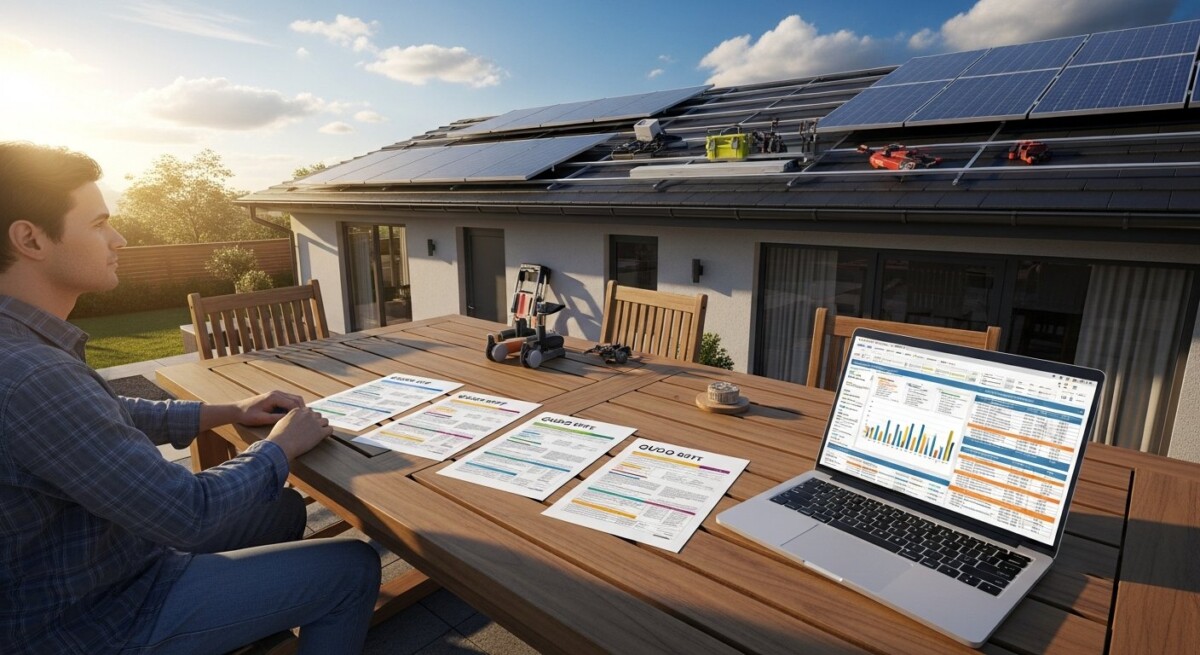
Your monthly electricity bill keeps climbing. You have heard that solar panels can slash those costs, but you are not sure where to start. Many homeowners feel stuck between wanting to save money and fearing they will pick the wrong installer. That is why understanding how many solar quotes homeowners should compare is the first step toward making a confident, money-saving decision. By gathering multiple quotes, you can reduce your energy bills, gain energy independence, and take advantage of government incentives without overpaying.
Understanding how many solar quotes homeowners should compare
Getting solar quotes means asking several installation companies to provide a written estimate for your home. Each quote outlines the equipment they recommend, the total cost, the expected energy production, and the financing options. Comparing these offers helps you see which installer gives you the best value for your specific roof and electricity usage.
Most solar experts recommend comparing at least three to five quotes. This number gives you enough data to spot an overpriced system or one that uses low-quality panels. It also helps you understand the range of prices and services available in your area. Skipping this step can leave you paying thousands more than necessary or stuck with a system that underperforms.
Why three to five quotes matter
When you collect multiple quotes, you learn what a fair price looks like. Some companies charge a premium for their brand name, while others cut corners on installation. A third installer might offer better warranties or more efficient panels at a similar price. Without comparing, you cannot tell which deal is truly best for your home.
Why Solar Energy Is Becoming More Popular
Rising electricity rates push more homeowners to look for alternatives. Solar panels let you generate your own power, so you rely less on the grid and its fluctuating prices. Over time, the savings can cover the cost of the system and then put money back in your pocket.
Environmental concerns also drive the shift. Solar energy produces no carbon emissions, which helps reduce your household’s footprint. Many homeowners feel good about contributing to a cleaner future while also saving money. Federal tax credits and local rebates make the upfront cost much more manageable, speeding up the payback period.
If you are considering solar power for your home, comparing installation quotes can help you understand your options. Request a free solar quote or call to learn more.
Common Questions Homeowners Have About Solar
Before investing in solar, most people ask about the upfront cost. A typical residential system runs between $15,000 and $25,000 before incentives, but the federal tax credit covers 30% of that amount. Many installers also offer zero-down financing, so you can start saving from month one.
Another frequent concern is whether the roof can support panels. Installers evaluate your roof’s age, material, and orientation during a free site visit. If your roof needs repairs, it is often better to fix it before installing solar to avoid extra costs later.
Homeowners also wonder how much power the system will actually produce. Professional installers use software to model your roof’s sun exposure and your household’s energy usage. This calculation gives you a realistic estimate of your future electricity savings.
- How much does solar really cost?
- Will solar work on my roof?
- How long does installation take?
- What happens during cloudy days or at night?
- Do I need a battery?
- How long do solar panels last?
How Solar Panel Installation Works
The process begins with a home energy assessment. An installer reviews your past electric bills, measures your roof, and checks for shading from trees or nearby buildings. This data helps them design a system that meets your specific needs.
After you approve the design, the installer handles permits and paperwork with your local utility and government. This step ensures your system qualifies for net metering and any available rebates. Once permits are approved, the physical installation usually takes one to three days, depending on the system size and roof complexity.
- Schedule a free consultation and home energy assessment
- Receive a custom system design and quote
- Apply for permits and utility approvals
- Install solar panels, inverter, and mounting hardware
- Pass final inspection and activate the system
Speaking with experienced installers can help you determine the best solar solution for your home. Compare solar quotes here or call to explore available options.
Signs Your Home May Be Ideal for Solar
Homes that face south or west with little shading get the most sunlight, making them prime candidates for solar. Even roofs with east or west exposure can still produce significant energy, especially with modern high-efficiency panels. The key is having enough unshaded roof area to fit a system that covers your electricity use.
High monthly electric bills are another strong indicator. If you pay more than $100 per month, solar can likely reduce or eliminate that cost. Additionally, if you plan to stay in your home for at least five to seven years, you will have plenty of time to recoup your investment through savings.
- Your roof gets direct sunlight for most of the day
- Your electricity bills are consistently high
- You have at least 300 square feet of usable roof space
- Your roof is less than 10 years old or in good condition
- You plan to live in your home for several more years
- Your state or utility offers solar incentives or net metering
What Affects Solar Installation Costs
System size is the biggest cost driver. A larger system that covers 100% of your electricity use costs more upfront but delivers greater long-term savings. Equipment quality also matters,premium panels and inverters cost more but often come with better warranties and higher efficiency.
Installation complexity can raise the price. A simple south-facing roof with standard shingles is quick and inexpensive to install. A complex roof with multiple angles, tiles, or skylights requires more labor and specialized hardware. Local incentives and the federal tax credit can offset a large portion of these costs, so it pays to research what is available in your area.
The cost of solar installation varies depending on your home and energy needs. Request personalized solar quotes or call to see what options are available.
Tips for Choosing a Reliable Solar Installer
Start by checking each installer’s experience and credentials. Look for companies that have been in business for several years and hold certifications from the North American Board of Certified Energy Practitioners (NABCEP). This certification indicates they follow industry best practices.
Read customer reviews on independent sites like Google, Yelp, or the Better Business Bureau. Pay attention to comments about communication, timeliness, and how the company handles problems. A few negative reviews are normal, but patterns of complaints are a red flag.
- Verify the installer’s license and insurance
- Ask about equipment warranties (panels, inverter, workmanship)
- Read recent customer reviews on multiple platforms
- Compare at least three to five detailed quotes
- Ask for references from recent installations in your area
Long-Term Benefits of Installing Solar Panels
Once your system is paid off, your electricity is essentially free for the remaining 20 to 30 years of the panels’ lifespan. This can save you tens of thousands of dollars over time. Solar panels also increase your home’s resale value, often by three to four percent, according to studies.
Energy independence means you are less affected by utility rate hikes and grid outages. When paired with a battery, you can keep your lights on during blackouts. On a larger scale, every solar home reduces demand on the grid and cuts greenhouse gas emissions, making a real difference for the environment.
FAQs
How many solar quotes homeowners should compare before buying?
Most experts recommend comparing at least three to five quotes. This range gives you a good sense of market pricing and helps you avoid overpaying. It also lets you compare equipment quality, warranties, and financing terms side by side.
Are solar quotes free?
Yes, nearly all reputable solar companies provide free, no-obligation quotes. In our guide on are solar quotes free, we explain how to get detailed estimates without any upfront cost.
What should I look for in a solar quote?
Look for the total system cost, the specific panel and inverter models, the projected annual energy production, and the warranty terms. Also check the financing options and any hidden fees. A clear, itemized quote is a sign of a trustworthy installer.
How long does it take to get solar quotes?
Most companies provide a quote within a few days after a quick phone call or online form. Some can even give a ballpark estimate over the phone. A detailed, site-specific quote usually takes one to two weeks.
Can I negotiate solar quotes?
Yes, you can negotiate. Once you have multiple quotes, you can ask your preferred installer if they can match a lower price or offer better equipment. However, do not sacrifice quality or warranty for a lower upfront cost.
Do solar panels work in cloudy or rainy climates?
Yes, solar panels still generate electricity on cloudy days, just at a reduced rate. Modern panels are designed to capture diffuse light. Systems in cloudy regions like the Pacific Northwest still produce significant energy over the course of a year.
What is net metering?
Net metering is a billing arrangement where your utility credits you for excess electricity your panels send to the grid. You can use those credits when your system is not producing power, such as at night. This makes solar more financially attractive.
How long do solar panels last?
Most solar panels come with a 25-year performance warranty, and they often continue producing electricity well beyond that. Their output gradually declines, but even after 30 years, many panels still operate at 80% or more of their original capacity.
Comparing solar quotes is the smartest way to ensure you get a system that saves you money and performs reliably for decades. Whether you are motivated by lower bills, energy independence, or environmental benefits, gathering multiple offers puts you in control. Start by requesting free quotes from trusted installers in your area, and take the first step toward a brighter, more affordable energy future.