What Is Inverter Efficiency Rating: Your Guide to Solar Savings
You open your monthly electricity bill and wince at the total. The number keeps climbing, and you wonder if there’s a way to take control. Many homeowners feel the same frustration, which leads them to search for what is inverter efficiency rating and how it affects their potential savings. Understanding this concept can help you reduce energy bills and become less dependent on the grid.
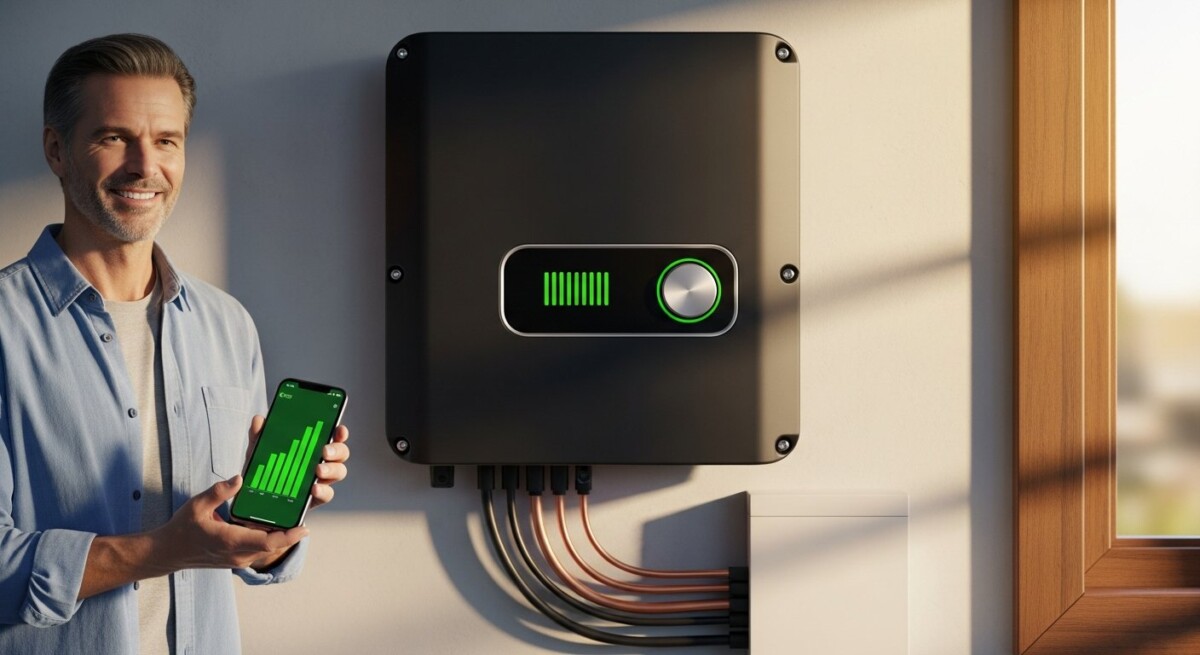
An inverter’s efficiency rating tells you how much of the direct current (DC) electricity your solar panels produce gets converted into usable alternating current (AC) electricity for your home. The higher the rating, the less energy you lose in the conversion process. This small number has a big impact on your long-term savings and system performance.
Understanding what is inverter efficiency rating
Think of your solar inverter as the brain of your solar energy system. Solar panels generate DC electricity, but your home and the power grid run on AC electricity. The inverter’s job is to convert that DC power into AC power so you can actually use it. The efficiency rating measures how well it performs that task.
Most modern inverters have efficiency ratings between 95% and 99%. A 97% efficient inverter loses only 3% of the energy during conversion, while a 95% model loses 5%. Over the 25- to 30-year lifespan of a solar system, that 2% difference can translate into hundreds or even thousands of dollars in lost electricity savings.
Peak efficiency vs. weighted efficiency
You will often see two numbers on an inverter’s spec sheet: peak efficiency and weighted efficiency (sometimes called CEC efficiency). Peak efficiency is the highest efficiency the inverter can achieve under perfect conditions. Weighted efficiency is a more realistic average that accounts for real-world conditions like varying sunlight and temperature.
Always compare weighted efficiency ratings when evaluating inverters. This number gives you a truer picture of how the inverter will perform day in and day out on your roof. In our guide on boost system performance with inverter efficiency, we explain how to use these ratings to choose the best equipment for your home.
Why Solar Energy Is Becoming More Popular
Electricity rates across the United States have risen by an average of 4-5% per year over the past decade. Homeowners are tired of unpredictable bills and want a solution that offers stability. Solar energy lets you lock in a large portion of your electricity costs and protect yourself from future rate hikes.
Environmental concerns also play a major role. More families want to reduce their carbon footprint and contribute to a cleaner future. Solar panels generate electricity without producing greenhouse gases, making them one of the most effective tools for fighting climate change at the household level.
Long-term savings are the most compelling reason for most homeowners. A well-designed solar system can pay for itself in 6 to 10 years and then provide free electricity for another 15 to 20 years. That adds up to tens of thousands of dollars in savings over the system’s lifetime.
If you are considering solar power for your home, comparing installation quotes can help you understand your options. Request a free solar quote or call (888) 555-0199 to learn more.
Common Questions Homeowners Have About Solar
Installing solar panels is a significant investment, so it’s natural to have questions. Many homeowners worry about the upfront cost and whether the system will deliver the promised savings. Others wonder if their roof gets enough sunlight or if the equipment will last.
The good news is that professional installers address these concerns every day. They can perform a site assessment, calculate your potential savings, and recommend a system that fits your budget and energy needs. Below are some of the most common questions people ask before going solar.
- How much does a solar system cost for an average home?
- Will solar panels work on a shaded or north-facing roof?
- How long do solar panels and inverters last?
- What happens to my system during a power outage?
- Can I add battery storage later?
- How do I know if a solar installer is reputable?
How Solar Panel Installation Works
The process of going solar is simpler than most people expect. It starts with a free consultation and site assessment, where an installer evaluates your roof, shading, and energy usage. They use this information to design a system that maximizes your savings and fits your home’s architecture.
Once you approve the design, the installer handles all permits and paperwork. This step is crucial because it ensures your system meets local building codes and utility requirements. After permits are approved, the actual installation usually takes one to three days, depending on the system size.
- Home energy assessment , Review your past electric bills and analyze your usage patterns.
- System design , The installer creates a custom layout and selects equipment based on your roof and needs.
- Permits and approvals , Necessary paperwork is filed with your city, HOA, and utility company.
- Panel installation , Mounts are attached to the roof, panels are secured, and wiring is connected.
- System activation , The utility company grants permission to operate, and you start generating power.
Speaking with experienced installers can help you determine the best solar solution for your home. Compare solar quotes here or call (888) 555-0199 to explore available options.
Signs Your Home May Be Ideal for Solar
Not every home is a perfect candidate for solar, but many are. The ideal home has a south- or west-facing roof that receives direct sunlight for most of the day. Minimal shading from trees, chimneys, or neighboring buildings also helps maximize energy production.
Your monthly electricity bill is another strong indicator. If you pay $100 or more per month, solar can likely reduce or eliminate that cost. Homeowners who plan to stay in their house for at least five to seven years also benefit the most, since that is the typical payback period.
- Your roof gets at least 4-5 hours of direct sunlight per day.
- Your monthly electric bill averages $100 or more.
- You have enough roof space facing south, east, or west.
- Your roof is in good condition and less than 10 years old.
- You plan to stay in your home for at least 5 more years.
- Your state or utility offers net metering or solar incentives.
What Affects Solar Installation Costs
Solar system prices vary widely depending on several factors. The size of the system,measured in kilowatts (kW),is the biggest cost driver. A larger system produces more electricity but costs more upfront. Equipment quality also matters; premium panels and inverters cost more but offer higher efficiency and longer warranties.
Installation complexity can increase costs too. A simple roof with easy access and standard shingles is cheaper to install than a complex roof with tiles, skylights, or multiple stories. Local labor rates and permitting fees also vary by region, so getting quotes from local installers is essential.
Government incentives and rebates can significantly lower your net cost. The federal solar tax credit currently allows you to deduct 30% of your system cost from your federal taxes. Many states and utilities offer additional rebates, performance payments, or property tax exemptions that further reduce the price.
The cost of solar installation varies depending on your home and energy needs. Request personalized solar quotes or call (888) 555-0199 to see what options are available.
Tips for Choosing a Reliable Solar Installer
Choosing the right installer is just as important as choosing the right equipment. A reputable company will conduct a thorough site assessment, explain your options clearly, and provide a detailed written quote. They should also handle all permitting and inspections, so you don’t have to worry about the paperwork.
Warranties are another critical factor. Look for installers that offer at least a 10-year workmanship warranty, and make sure the solar panels and inverter come with strong manufacturer warranties. Reading online reviews and asking for references can also give you confidence in your choice.
- Check the installer’s experience , look for at least 3-5 years in business.
- Verify licenses, insurance, and certifications like NABCEP.
- Read customer reviews on Google, Yelp, and the Better Business Bureau.
- Compare at least three quotes to ensure you get a fair price.
- Ask about warranties for equipment, workmanship, and performance.
- Request a clear breakdown of costs, including permits and fees.
Long-Term Benefits of Installing Solar Panels
Lower electricity bills are the most immediate and obvious benefit. Once your system is paid off, the electricity it generates is essentially free. Over 25 years, that can mean $20,000 to $50,000 or more in avoided utility costs, depending on your location and energy usage.
Solar panels also increase your home’s resale value. Studies from the National Renewable Energy Laboratory and Zillow show that homes with solar systems sell for 4-6% more than comparable homes without them. Buyers are attracted to the promise of lower utility bills and energy independence.
Beyond financial gains, solar energy reduces your environmental impact and gives you greater control over your energy future. You become less vulnerable to grid outages and utility rate increases. With battery storage, you can even power critical appliances during blackouts and achieve true energy independence.
What is inverter efficiency rating and how does it affect my savings?
Inverter efficiency rating measures how much DC electricity from your panels is converted to usable AC electricity. A higher rating means less energy loss and greater savings. For example, a 99% efficient inverter wastes only 1% of energy, while a 95% model wastes 5%, costing you more over time.
How long do solar inverters last?
Most string inverters last 10 to 15 years, while microinverters and power optimizers can last 20 to 25 years. Your installer can help you choose the best type based on your roof layout and budget. Replacing an inverter is a normal part of system maintenance and costs between $1,000 and $2,500.
What is the difference between peak and weighted inverter efficiency?
Peak efficiency is the highest efficiency under ideal lab conditions. Weighted efficiency (CEC efficiency) reflects real-world performance across varying sunlight and temperature. Always use weighted efficiency when comparing inverters because it better predicts actual energy production.
Can I install solar panels myself to save money?
DIY solar installation is possible but risky for most homeowners. Mistakes in wiring, mounting, or permitting can lead to safety hazards, voided warranties, and lower energy production. Professional installers ensure your system is safe, efficient, and eligible for incentives.
How much can I save by switching to solar?
Savings depend on your electricity rates, system size, sunlight, and local incentives. On average, homeowners save $1,000 to $2,000 per year on electricity bills. Over 25 years, total savings often range from $20,000 to $50,000 or more.
What happens to my solar system during a power outage?
Standard grid-tied solar systems shut down during a power outage to protect utility workers. If you want backup power, you need a battery storage system like the Tesla Powerwall or Enphase Encharge. Batteries store excess solar energy and power your home when the grid goes down.
Are there government incentives for solar panels in 2025?
Yes, the federal solar Investment Tax Credit (ITC) offers a 30% tax credit on system costs through 2032. Many states also offer additional rebates, tax credits, or property tax exemptions. Your installer can help you identify and apply for all available incentives.
How do I know if my roof is suitable for solar?
A professional installer will assess your roof’s age, material, orientation, and shading during a free site visit. Generally, roofs less than 10 years old with good southern exposure and minimal shading are excellent candidates. Asphalt shingle, metal, and tile roofs all work well with solar.
Understanding what is inverter efficiency rating is the first step toward making an informed solar investment. This single specification affects your energy production, savings, and system longevity. By working with experienced installers and comparing multiple quotes, you can choose a system that maximizes your return and reduces your reliance on the grid.
Take the next step today. Contact trusted solar professionals in your area, request detailed quotes, and see how much you can save. Your future self,and your wallet,will thank you.